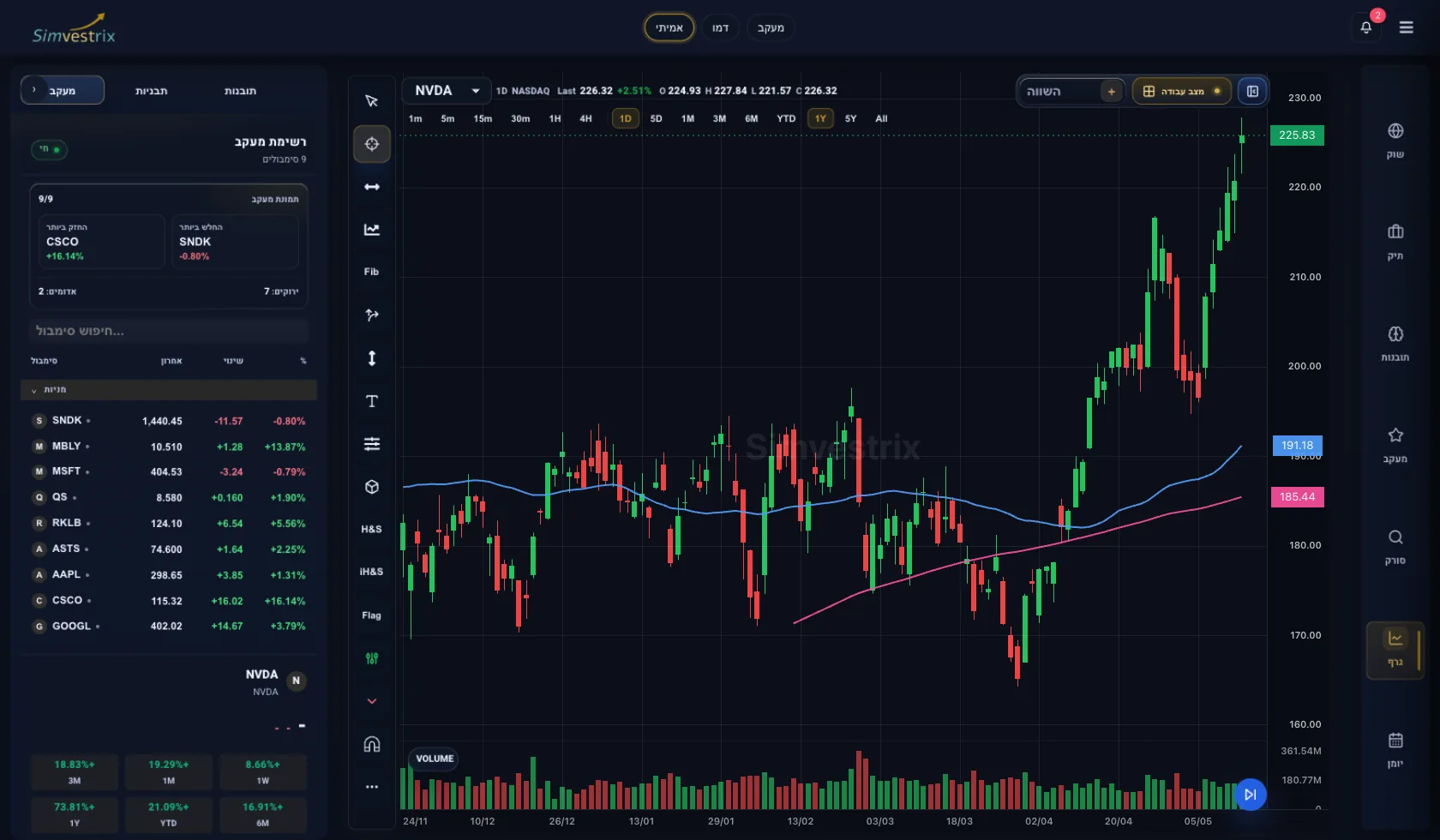
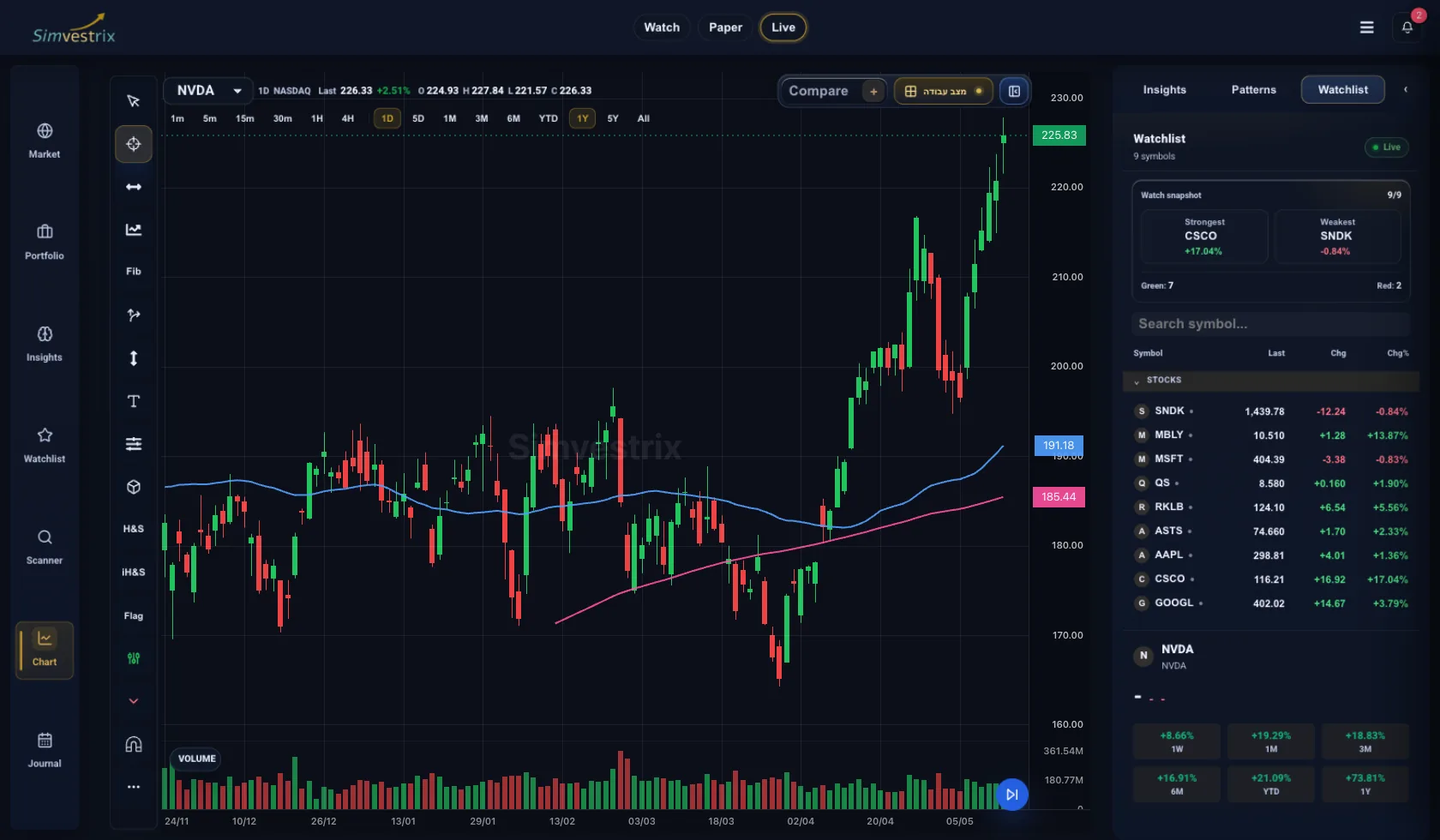
A trade idea starts on one screen, the chart lives on another, the watchlist sits in a browser tab, and the journal gets updated later - if it gets updated at all. That gap is where a lot of trading discipline breaks down. The real question in integrated trading platform vs separate tools is not convenience alone. It is whether your workflow helps you make better decisions under pressure.
For independent traders, fragmentation creates hidden costs. You lose time switching contexts, but more importantly, you lose continuity. Market analysis, position tracking, risk rules, and post-trade review stop being part of one system and start becoming a patchwork of tasks. That matters when you are trying to size positions correctly, monitor exposure, and learn from actual outcomes instead of impressions.
Integrated trading platform vs separate tools: what actually changes
At a surface level, the choice looks simple. Separate tools can give you flexibility. You can pick one app for charting, another for journaling, a spreadsheet for risk, and maybe a portfolio tracker on the side. If you like customizing your stack, that approach can feel efficient at first.
The problem shows up in the handoffs. Each tool has its own interface, logic, and data structure. A watchlist does not always connect to your journal. Your journal may not reflect portfolio-level exposure. Your risk model may live outside the place where you actually review setups. You end up rebuilding context every time you move from research to monitoring to review.
An integrated trading platform changes that by treating trading as one connected workflow. The chart is not isolated from the watchlist. The watchlist is not isolated from portfolio tracking. Trade review is not detached from the original setup or the risk parameters around it. Instead of collecting information from separate systems, you work inside a single operating environment designed to keep the full trading process visible.
That does not mean every trader needs an all-in-one platform. It means the more seriously you treat process, the more expensive fragmentation becomes.
Why separate tools feel powerful at first
There is a reason many traders build their own stack. Best-of-breed tools often go deeper in one category. A charting platform may offer the exact layout you want. A spreadsheet can be endlessly customized. A standalone journal may have a review feature you like. For experienced traders, assembling these tools can feel like control.
And sometimes it is. If your workflow is highly specialized, if you are comfortable maintaining your own systems, and if you have the discipline to keep everything updated, separate tools can work well. Many advanced traders operate this way for years.
But this setup depends on personal maintenance. You have to make sure inputs stay consistent, data gets transferred correctly, and nothing important falls through the cracks. The stack works because you keep it working. That is a meaningful burden, especially when markets are moving and attention is limited.
The issue is not that separate tools are bad. The issue is that they shift integration onto the trader.
The operational advantage of an integrated workspace
Trading performance is not just about finding good entries. It is also about keeping a repeatable process intact. This is where an integrated platform starts to matter.
When charting, watchlists, journaling, portfolio tracking, market analysis, and risk management exist in one environment, your workflow becomes tighter. You can move from idea generation to position review without losing context. You can compare trades against a documented plan instead of memory. You can see how one position fits into broader portfolio exposure rather than evaluating it in isolation.
That connected view supports better discipline in a few practical ways. First, it reduces friction. Traders are more likely to log trades, review setups, and monitor risk when those actions are built into the same workspace they already use. Second, it improves visibility. You can spot concentration, recurring mistakes, and behavior patterns faster when your data is not scattered. Third, it supports consistency. A process is easier to follow when the tools themselves reinforce it.
This is the real argument for integration. It is not about replacing every possible feature with one dashboard. It is about creating a decision environment where research, monitoring, and review reinforce each other.
Where integrated trading platforms win most clearly
The biggest advantage shows up in post-trade learning. Traders often underestimate how much edge comes from review. But review only works when your records are complete and easy to analyze. If screenshots live in one app, notes in another, and performance data somewhere else, review becomes slow and selective. You end up studying only the trades you remember.
In an integrated platform, trade journaling is part of the operating flow, not an afterthought. That increases the odds that you capture the setup, rationale, execution, and result while the trade is still fresh. Over time, that creates a more reliable feedback loop.
Risk control is another major advantage. Separate tools often encourage traders to think about risk in fragments - one trade at a time, one chart at a time, one account view at a time. But real risk sits at the portfolio and process level too. Correlated exposure, position overlap, and repeated sizing mistakes are easier to catch when the platform is designed to show them together.
For independent traders trying to operate with more structure, that matters more than having ten disconnected applications with excellent individual features.
Where separate tools still make sense
A fair comparison of integrated trading platform vs separate tools has to admit that integration is not always the right answer for every trader.
If you are early in your development, still experimenting with style, and not yet running a defined process, separate tools may be enough. You may not know which features matter most to you yet. In that phase, testing individual tools can help you clarify your workflow.
Separate tools can also make sense for traders with very niche requirements. If one platform handles a specialized asset class or advanced analytical method that an integrated workspace does not support, using that standalone product may be justified. The same is true if you already have a mature system and the switching cost is high.
But even then, the trade-off should be explicit. You are gaining specialization while accepting more manual coordination, more room for inconsistency, and less shared context across your workflow.
Choosing based on your trading maturity
The right setup depends less on how many tools you can handle and more on how you want to operate.
If your priority is experimentation, separate tools can offer flexibility. If your priority is repeatability, control, and measurable improvement, integration usually becomes more valuable. As a trader matures, workflow quality matters more. You stop asking only whether a tool is powerful and start asking whether the system helps you act with consistency.
That shift is often what moves traders toward an integrated workspace. Not because they want fewer tabs for the sake of it, but because they want tighter feedback loops, stronger process adherence, and better visibility across the full trade lifecycle.
A platform like Simvestrix is built around that reality. The goal is not to pile features into one screen. It is to give independent traders a connected environment where analysis, watchlist management, trade journaling, portfolio oversight, and risk control work as one system.
The better question is not convenience
When traders compare tools, convenience tends to dominate the conversation. That is understandable, but it is too narrow. The stronger question is this: does your setup help you think clearly, manage risk consistently, and review performance with enough structure to improve?
If the answer is no, the issue may not be your strategy. It may be the operating environment around it.
A serious trading process needs more than good charts and scattered notes. It needs continuity from idea to execution to review. The closer your workspace gets to that standard, the easier it becomes to trade with intention instead of improvisation.