A trading day usually does not break down because of one bad chart read. It breaks down because research lives in one app, watchlists in another, notes in a spreadsheet, risk rules in your head, and post-trade review never happens. If you want to know how to build trading workflow that actually improves decision quality, start by treating trading like an operating system, not a series of disconnected tasks.
That shift matters because most independent traders do not have an idea problem. They have a workflow problem. They can spot setups, follow markets, and react quickly, but without structure, the process gets noisy. Good trades get missed. Bad trades get rationalized. Risk expands quietly. A strong workflow fixes that by making every step visible, repeatable, and easier to review.
What a trading workflow is really supposed to do
A trading workflow is not just a checklist for entering positions. It is the full sequence that connects market research, watchlist building, trade planning, execution support, portfolio awareness, and review. The goal is simple: reduce friction where it hurts and increase discipline where it counts.
For an independent trader, the right workflow should answer a few questions fast. What is on your radar today? Why does a setup qualify? How much risk fits the trade? What is already exposed in the portfolio? What happened after the trade closed, and what should change next time?
If your current setup cannot answer those questions without bouncing between tools, your process is costing you more than subscription fees. It is costing clarity.
How to build trading workflow around actual decisions
The fastest way to build a better process is to map it around decision points, not around tools. Most traders start with software first and end up creating more fragmentation. Start instead with the moments where judgment matters.
Stage 1: Research and market scanning
This is where trade ideas begin, but it should be narrower than most traders make it. A good research stage is not endless chart browsing. It is a structured filter for finding instruments worth deeper attention.
That means defining what belongs on your screen before the session starts. Your scans, market themes, sector interest, technical conditions, and macro context should all feed into a watchlist with a purpose. If everything is on the list, nothing is.
The trade-off here is between breadth and focus. A broader scan can surface more opportunities, but it also increases noise and weakens follow-through. A tighter list improves concentration, though it may miss outliers. The right balance depends on your strategy frequency and holding period.
Stage 2: Watchlist management and setup qualification
Once symbols are on your radar, the next step is qualification. This is where many workflows fail because the criteria are vague. A symbol should not stay on a watchlist just because it looks interesting. It should stay there because it meets defined conditions.
That could include technical structure, liquidity, event timing, relative strength, volatility profile, or alignment with your broader thesis. The specific filters will vary by style, but the principle does not. Every symbol needs a reason to remain active.
This part of the workflow should also separate passive monitoring from actionable trade planning. Not every watchlist item deserves a trade plan. Some deserve observation only. That distinction prevents overtrading.
Build risk into the workflow before execution
Risk management works best when it is upstream. If position sizing and exposure checks happen after conviction builds, objectivity drops. By the time you love a setup, you are already negotiating with your own rules.
A better workflow places risk controls before execution. That means defining max risk per trade, portfolio concentration limits, correlation exposure, and invalidation points while the idea is still just a candidate. You are not asking, "How much can I make?" You are asking, "What is this allowed to cost me if I am wrong?"
How to build trading workflow for position sizing
Position sizing should not be improvised. It should follow a repeatable method tied to account size, stop distance, and total portfolio risk. This is one of the clearest places where a workflow creates real edge because it turns abstract discipline into a measurable rule.
There is no universal model that fits every trader. A swing trader running a concentrated book will size differently from a shorter-term trader managing more frequent entries. What matters is consistency. If your size changes because of confidence rather than risk logic, your process is leaking.
The same applies to portfolio-level visibility. A trade may look acceptable on its own and still be a poor decision once you account for overlapping sector risk, market beta, or existing directional exposure.
Execution should be the shortest part of the process
Execution gets too much attention in trader culture and not enough discipline in practice. The point of the earlier workflow stages is to make execution almost boring. By the time you act, the research is done, the setup is qualified, and the risk is defined.
That reduces emotional drift. You are not chasing. You are confirming. The best execution process is usually the least dramatic one.
This is also where workflow integration matters most. If your charting, watchlists, risk context, and trade notes are scattered, execution becomes slower and less clean. Even a small delay in context gathering can change entry quality or cause you to skip a valid setup.
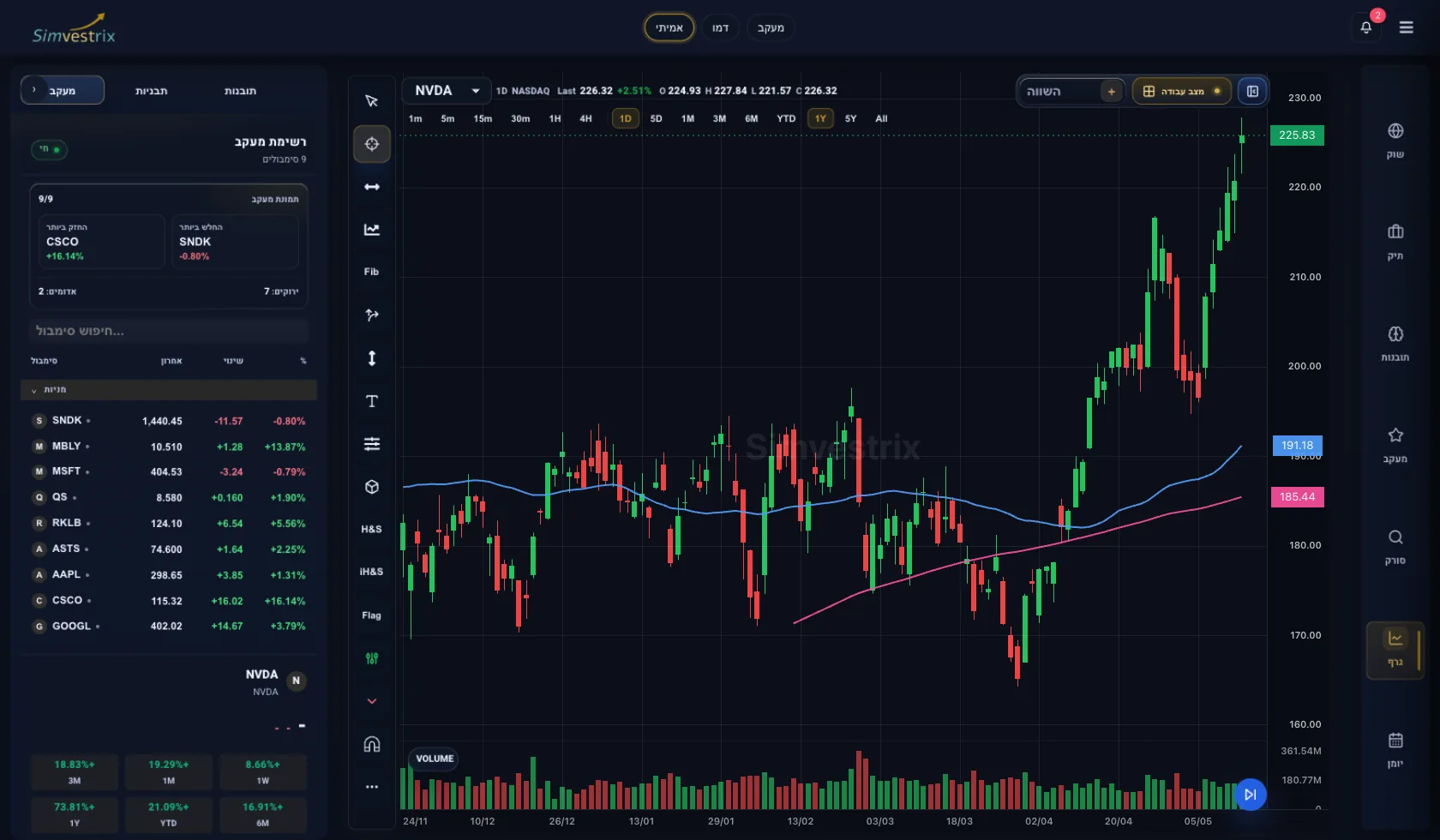
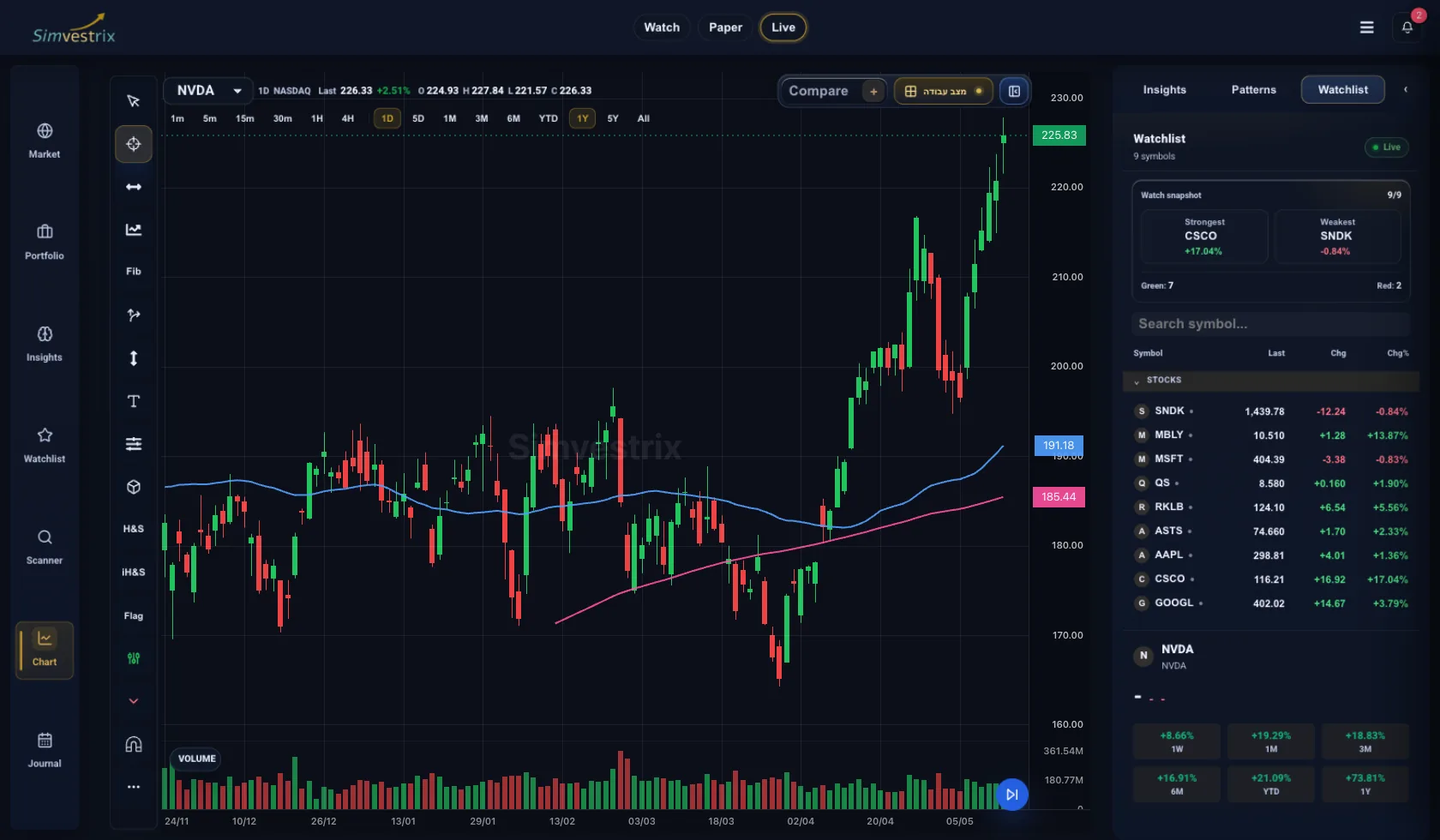
For independent traders, this is why a connected workspace has practical value. When market analysis, watchlist tracking, journaling, portfolio oversight, and risk controls live in one environment, the process is easier to follow under pressure. Simvestrix is built around that exact problem: giving traders a single operating layer instead of a stack of disconnected tools.
Review is where the workflow becomes self-correcting
A trading workflow is incomplete without review. Not occasional reflection. Structured review.
Most traders think they are reviewing because they remember recent trades or glance at account performance. That is not enough. Useful review ties outcomes back to process. Did the setup match your plan? Did you respect risk rules? Did the trade fail for valid market reasons or because execution drifted?
What to track in your post-trade review
Post-trade review should connect hard data with decision context. P and L matters, but it is not the whole story. You also need to track setup type, holding time, entry quality, exit quality, realized versus planned risk, and whether the trade followed the playbook.
This is where journaling becomes more than recordkeeping. It gives structure to pattern recognition. Over time, you can see which setups actually produce edge, where mistakes repeat, and whether performance is improving because of skill or just favorable conditions.
There is an important trade-off here. The more data you track, the richer the analysis becomes, but too much logging creates friction and traders stop using it. The answer is not maximum detail. It is relevant detail that can change future decisions.
A practical model for a connected workflow
If you are building from scratch or rebuilding after tool sprawl, keep the workflow simple enough to maintain. In practice, most solid trading workflows follow the same chain: scan the market, refine the watchlist, qualify setups, define risk, monitor execution conditions, track open exposure, and review results.
What changes from trader to trader is how tightly each part is connected. A swing trader may need stronger emphasis on portfolio tracking and weekly review. A more active trader may need faster watchlist updates and tighter execution support. The workflow should match your trading tempo.
The common mistake is adding complexity before proving utility. If a rule, dashboard, or tracking field does not improve decisions, it is clutter. Good workflow design is not about building more process. It is about building enough process to keep decisions clean.
Signs your current workflow needs rebuilding
If you are wondering whether your workflow is actually the problem, look for operational symptoms. You regularly enter trades without documented risk. Your watchlist gets bloated and stale. You cannot easily compare planned versus actual trade behavior. Portfolio exposure surprises you. Review happens only after a bad week.
Those are not minor inefficiencies. They are signs that your process is reactive instead of controlled.
Rebuilding does not mean replacing every tool overnight. It means deciding what the workflow must accomplish, then removing friction between those steps. In some cases that means better habits. In others, it means using a platform built to support the full cycle rather than just one piece of it.
A strong trading workflow will not eliminate losses, and it will not turn a weak strategy into a good one. What it does is make your decision process visible enough to improve, stable enough to repeat, and disciplined enough to trust when markets get noisy. That is what serious traders need most: not more input, but more control.