If your positions live in one broker, your watchlists in another app, and your trade notes in a spreadsheet you only open after a rough week, you do not really have oversight. You have fragments. Portfolio tracking software matters because active trading decisions depend on context, and context breaks down fast when your holdings, risk, performance, and review process are split across disconnected tools.
For independent traders, that disconnect creates more than inconvenience. It distorts decision-making. You can misread concentration, underestimate correlated exposure, overlook changes in unrealized risk, or repeat weak setups because the evidence is buried in separate systems. Good portfolio tracking is not passive recordkeeping. It is operational control.
What portfolio tracking software should actually do
A basic tracker can show positions, cost basis, and profit and loss. That is useful, but not enough for anyone managing trades actively. The real job of portfolio tracking software is to turn a list of holdings into a working view of portfolio behavior.
That means showing what is happening now, not just what happened at the close. You need visibility into allocation, open exposure, performance by position or strategy, and how each new trade changes overall risk. If your software only tells you whether a position is green or red, it is reporting outcomes, not supporting decisions.
For traders, the standard should be higher. You are not only asking, "How much am I up or down?" You are asking whether your capital is concentrated in one theme, whether several trades are expressing the same market view, whether your open positions still fit your rules, and whether your recent results reflect skill, drift, or pure market regime.
That is why the strongest tools combine tracking with analysis. Portfolio data becomes much more useful when it sits next to charting, watchlists, journaling, and risk controls. A position rarely becomes a problem in isolation. It becomes a problem when no system connects idea generation, entry logic, size, and review.
Why traders outgrow spreadsheets and single-purpose apps
Most traders start with improvised systems because they are easy to build. A spreadsheet feels flexible. A broker dashboard feels close enough. A journaling app fills one gap, and a charting platform fills another. The trouble starts when the workload grows.
Spreadsheets require manual upkeep, which means they degrade under real trading conditions. The more active you are, the more likely you are to delay updates, skip notes, or work from stale numbers. At that point, the sheet becomes a historical archive, not a live management tool.
Broker dashboards have a different limitation. They are designed around account activity, not your full workflow. They can show positions and balances, but they usually stop short of giving you a broader operating view across watchlists, market context, trade review, and structured performance analysis. They tell you what sits in the account. They do not always help you understand why it is there, how it fits your plan, or what pattern it belongs to.
Single-purpose apps create another kind of friction. Each one may do its job well, but the trader still has to connect the dots. That means more toggling, more duplicate inputs, more room for inconsistency, and less speed when markets are moving. Fragmentation looks manageable until it starts costing clarity.
The features that matter in portfolio tracking software
The best portfolio tracking software is not the one with the longest feature list. It is the one that tightens the feedback loop between market analysis, position management, and review.
Real-time or near real-time position monitoring is foundational. You need to see how holdings are changing as prices move, especially if you manage swing trades or rotate capital across sectors and themes. Delayed insight is still insight, but it is not enough when timing and exposure matter.
Allocation and exposure analysis matter just as much. Many traders think they are diversified because they hold several tickers. In practice, they may be heavily concentrated in one sector, one factor, or one market narrative. Portfolio tracking software should make those overlaps obvious. It should help answer a simple question: what am I actually betting on right now?
Performance breakdowns are another dividing line between basic and serious tools. It helps to know your total return. It helps much more to know which setups work, which timeframes produce the best results, whether gains are coming from a few outliers, and where losses cluster. If your platform cannot segment performance meaningfully, improvement stays vague.
Trade journaling is also more valuable when connected to portfolio tracking. Notes taken in isolation often become dead documentation. Notes linked to positions, entries, exits, and outcomes become usable evidence. They let you compare intent with execution and identify whether recurring mistakes come from analysis, sizing, timing, or discipline.
Risk management deserves special attention here. Portfolio tracking software should not only display what you own. It should support how you manage downside. That includes monitoring open risk, position sizing effects, and broader portfolio implications when adding or reducing exposure. Many traders focus on the quality of the next setup while underestimating the cumulative risk already on the board.
What to look for if you trade actively
If you are evaluating portfolio tracking software as an active trader, look beyond appearance and convenience. Start with workflow fit.
A clean interface matters, but a clean interface without depth becomes limiting fast. You want a workspace that can support pre-trade analysis, live monitoring, and post-trade review without forcing you into separate systems for each task. The less context you lose between those phases, the better your decisions tend to be.
Data structure matters too. Can you organize trades by strategy, timeframe, asset class, or market theme? Can you isolate performance for specific setups? Can you see portfolio-level behavior while still drilling down into individual positions? If the answer is no, the tool may be fine for passive investors but weak for traders who improve through review.
Customization is another practical factor. Not every trader measures performance the same way. Some care most about win rate by setup. Others prioritize expectancy, exposure control, or drawdown behavior. Good software gives you enough flexibility to monitor what actually matters to your process rather than forcing a generic dashboard.
There is also a trade-off to consider between breadth and simplicity. Some platforms offer every metric imaginable but bury the signal under too much interface noise. Others stay simple but strip away the analysis needed to make better decisions. The right balance depends on your style, frequency, and level of structure. A swing trader with a defined review process needs different depth than a long-term investor checking holdings once a week.
Why an integrated workspace changes the quality of decisions
This is where the difference between a tracker and a trading workspace becomes clear. Portfolio tracking software works best when it is not isolated from the rest of your process.
When chart analysis, watchlists, journaling, and portfolio oversight live in one environment, you reduce translation errors. The setup you researched is the setup you monitor. The position you entered is the one tied to your thesis and review notes. The performance data you study later reflects the actual decisions you made, not a partial reconstruction.
That kind of continuity improves more than efficiency. It improves discipline. Traders are more likely to follow risk parameters and review outcomes honestly when the system makes those steps part of the normal workflow rather than extra admin after the fact.
For independent traders, that matters. You do not have a team handling analytics, compliance, and post-trade review in the background. Your platform is your infrastructure. If it is fragmented, your process usually becomes fragmented with it.
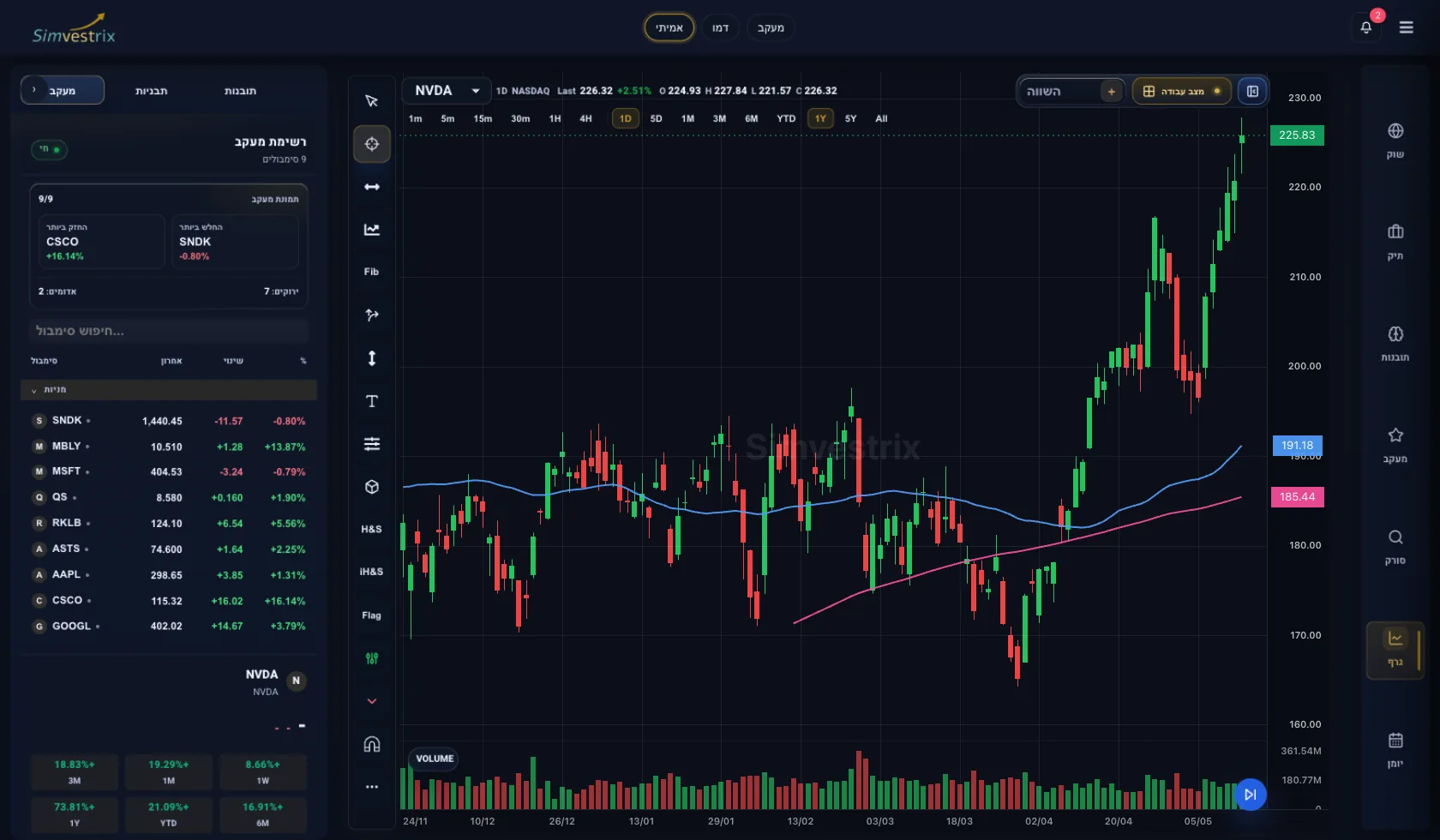
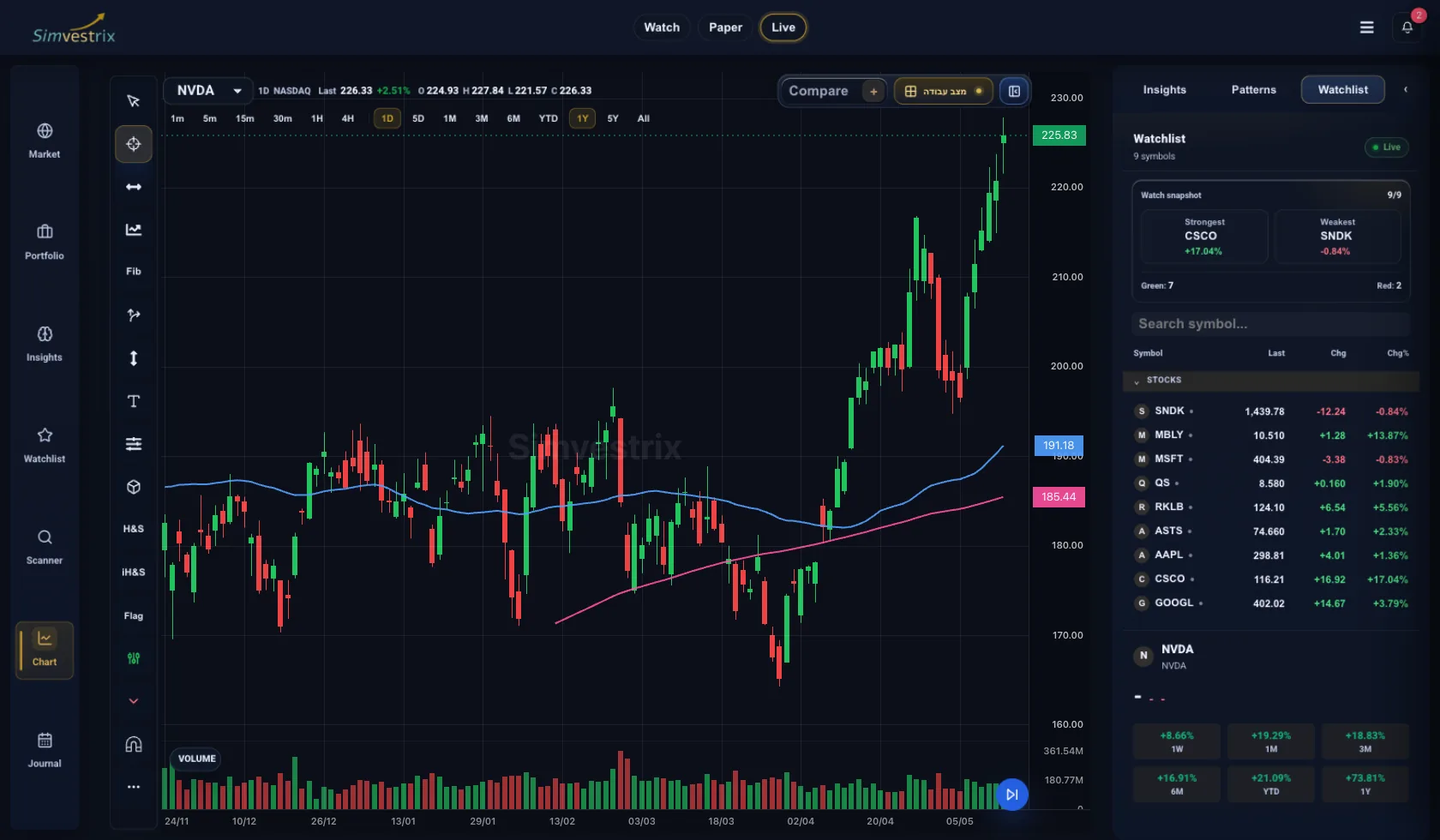
A connected system like Simvestrix is built around that reality. Instead of treating portfolio tracking as a standalone feature, it places it inside a broader trading workspace where monitoring, analysis, journaling, and risk management reinforce each other. That structure is not cosmetic. It is what helps convert market activity into repeatable decision-making.
The real value of portfolio tracking software
The real value is not that it shows more numbers. It is that it gives those numbers context.
A trader with better context can see when exposure is drifting, when performance is setup-dependent, when a strong streak is masking sloppy risk, and when portfolio construction no longer matches the original plan. That is the difference between reacting to outcomes and managing a process.
And that is the standard worth aiming for. Good portfolio tracking software should not just tell you what you hold. It should help you understand how you trade, where risk is building, and what needs to change before the market makes the lesson more expensive.