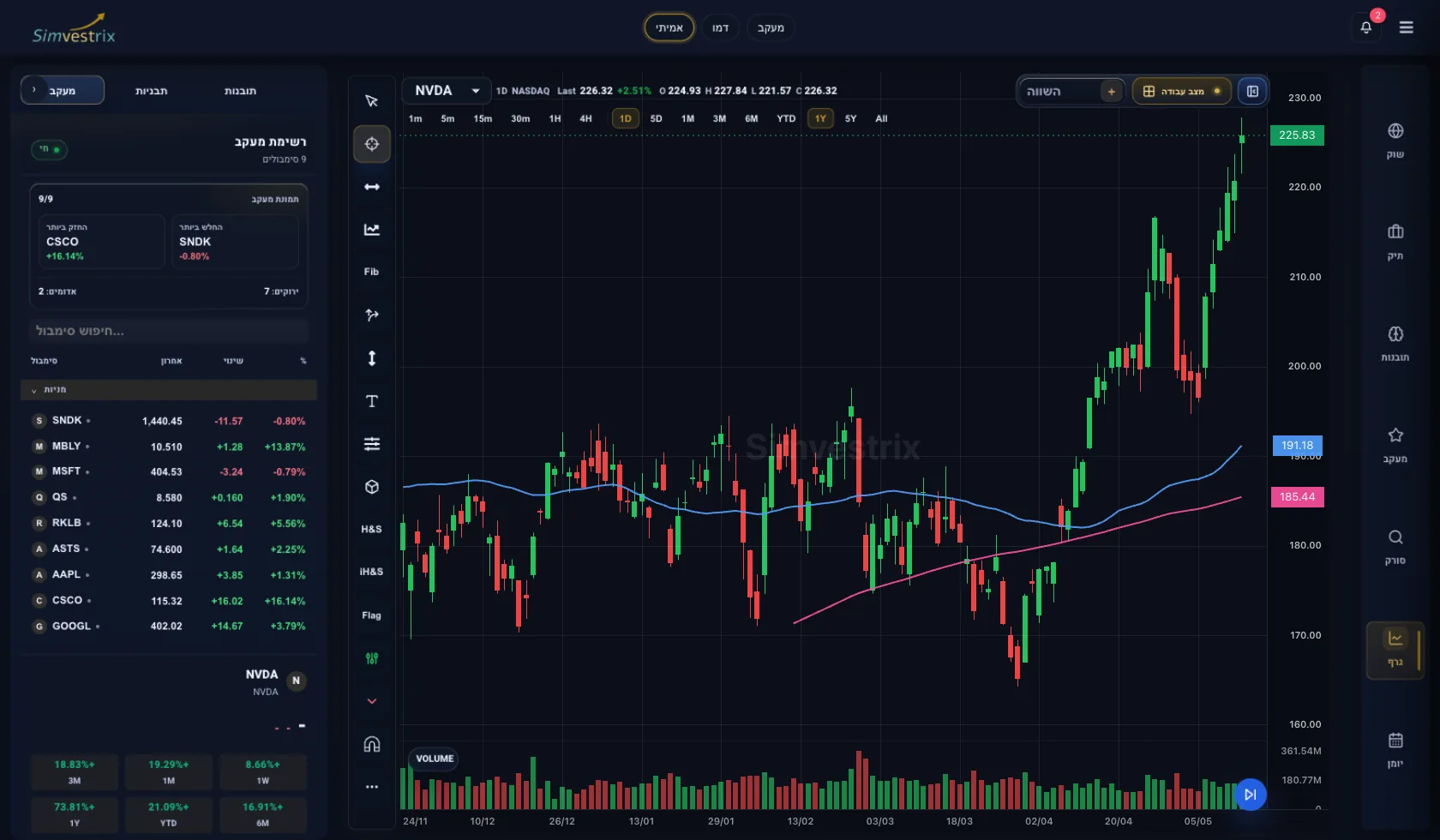
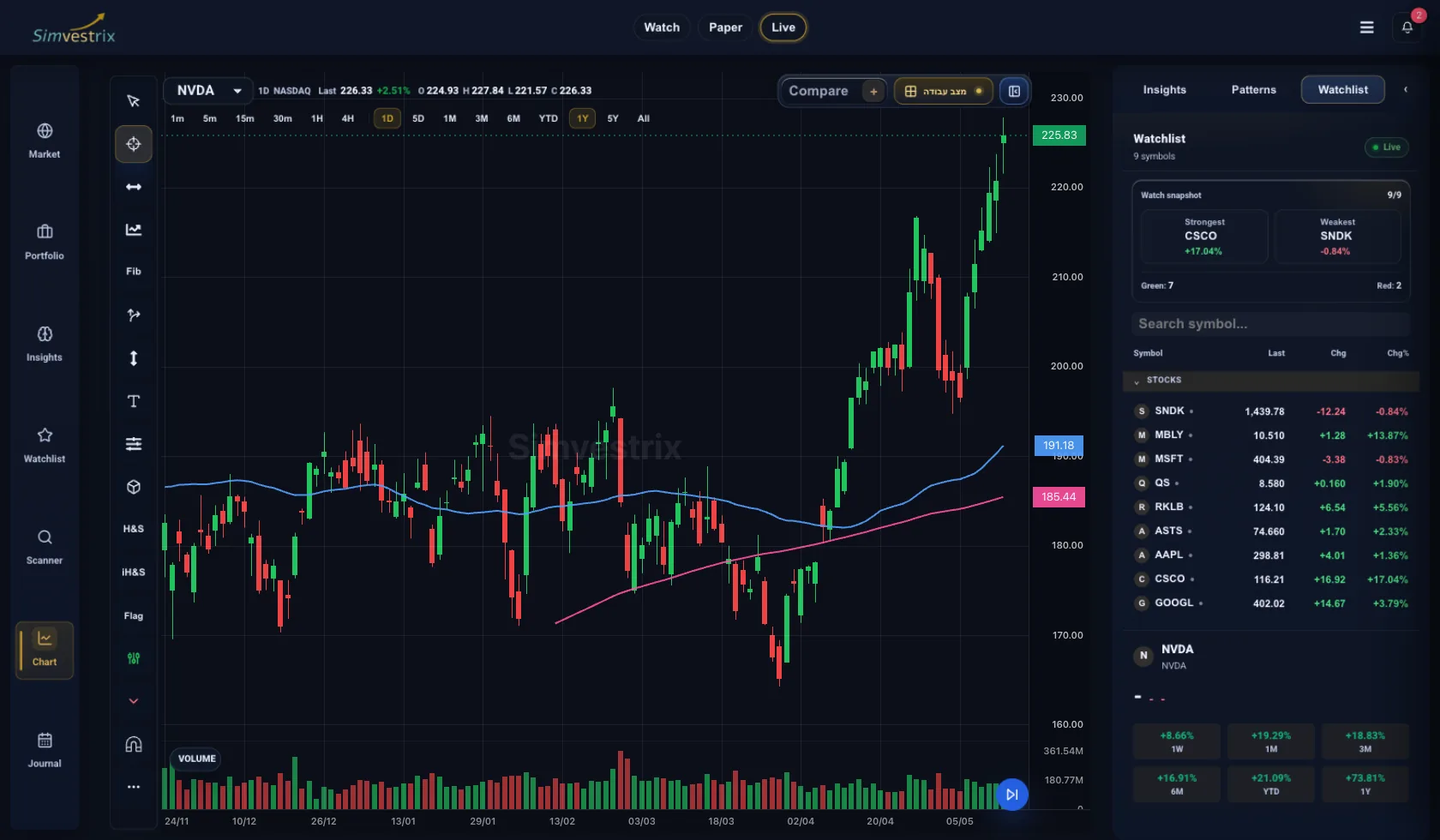
A trading alert should not be a louder version of market noise. It should be a specific instruction: review this chart, reassess this position, or prepare for a defined setup. This מדריך להגדרת התראות מסחר חכמות explains how to build alerts that support a repeatable process instead of pulling attention toward every intraday move.
Smart alerts are not trade signals. They are decision triggers. Their value comes from connecting a meaningful market condition to a preplanned response, then fitting that response into the trader's watchlist, risk limits, and portfolio context.
Start With the Decision, Not the Indicator
Most ineffective alerts begin with a familiar but weak instruction: notify me when a stock hits a certain price. Price matters, but a price level alone rarely tells you what to do next. The same level can represent a breakout, a failed rally, a support test, or a reason to reduce exposure depending on trend, volume, and your existing position.
Before configuring an alert, write the decision it is meant to support. For example: review a breakout candidate when it clears a multi-week range; assess whether to add to a winning position after a pullback holds; reduce risk if a position closes below a defined invalidation level.
This small change turns alerts from passive notifications into operational controls. You are no longer monitoring everything. You are monitoring the conditions that matter to your strategy.
Build Alerts Around Trading Scenarios
A useful alert structure has three parts: the market condition, the relevant context, and the required action. The condition might be a price crossing, a moving-average break, unusual volume, or a portfolio-level drawdown. Context explains why the event matters. The action determines what you will review before trading.
Consider a swing trader tracking a stock that has consolidated below resistance for three weeks. A basic alert at the resistance price is a start. A smarter configuration requires confirmation: the price moves above resistance, volume is above its recent average, and the broader sector is not breaking down. The alert does not tell the trader to buy. It tells the trader that the setup has earned a review.
For an existing position, the scenario changes. An alert below a support level may trigger a risk review rather than an immediate exit. If the stock closes below support while relative strength weakens, the trader can compare the move against the original trade thesis, current portfolio concentration, and predefined stop rules.
The distinction matters. Good alert systems preserve judgment while reducing delay.
מדריך להגדרת התראות מסחר חכמות לפי סוג תנאי
The best alert mix depends on your holding period, strategy, and available attention. Active traders may need intraday triggers, while swing traders often benefit more from end-of-day confirmation. Adding every available alert type usually creates fatigue, not insight.
Price and level alerts
Price alerts are most effective when attached to a meaningful chart level. Use them around support, resistance, prior highs and lows, gap levels, entry triggers, and invalidation points. Avoid setting alerts at round numbers simply because they are easy to remember.
Use separate alerts for separate decisions. An alert at a breakout level should not carry the same meaning as an alert at a stop level. Label each one with the setup and intended response, such as “Review breakout confirmation” or “Check thesis and exposure.” Clear labels prevent rushed interpretation when the market is moving quickly.
Trend and technical condition alerts
Trend alerts add context that price alone cannot provide. A moving-average cross, break of a trendline, RSI threshold, or relative-strength shift can help identify changes in market behavior. But these indicators should reinforce a setup, not replace one.
For example, an alert for a stock reclaiming its 50-day moving average becomes more useful when the stock is already on a watchlist for a potential trend reversal. Without that context, the same alert could generate dozens of low-quality notifications across a broad universe.
Use technical alerts sparingly. Indicators often produce frequent events in volatile or range-bound markets. If an alert does not lead to a defined review process, remove it.
Volume and volatility alerts
Volume can distinguish an important move from a routine fluctuation. A breakout on unusually high volume may justify immediate attention, while a break above resistance on weak volume may only require a note for end-of-day review.
Volatility alerts can also improve risk control. A sharp expansion in average true range, implied volatility, or daily range may change position-sizing assumptions. For option traders, volatility changes can affect both opportunity and risk even when the underlying price has not moved as expected.
These alerts are especially valuable around earnings, economic releases, and major sector events. The trade-off is sensitivity: thresholds set too low will create noise, while thresholds set too high may miss the early stage of a meaningful change. Review them after several weeks of use and adjust based on actual usefulness.
Portfolio and risk alerts
Single-symbol alerts protect attention. Portfolio alerts protect the account.
Set notifications for concentration limits, total exposure, sector overlap, drawdown thresholds, and position-size changes. A portfolio can appear diversified by ticker count while remaining heavily exposed to the same industry, factor, or market direction. Risk alerts make these hidden overlaps visible before they become a problem.
A practical example: a trader may allow no more than 25% of portfolio exposure in one sector and no more than 1% planned loss on any new trade. Alerts tied to those limits create a checkpoint before an otherwise attractive setup turns into correlated risk.
Use Alert Tiers to Protect Attention
Not every market event deserves the same urgency. A disciplined system separates alerts into tiers based on how quickly a decision may be required.
High-priority alerts are tied to live positions, stops, earnings-related risk, and immediate entry conditions. These can justify push or desktop notifications during market hours. Medium-priority alerts cover watchlist setups that require same-day review but not instant action. Lower-priority alerts include longer-term trend changes, portfolio observations, and research candidates that can be reviewed in a scheduled session.
This tiering prevents a common failure mode: reacting to watchlist noise with the urgency reserved for open-position risk. When every notification feels urgent, none of them is useful.
Connect Alerts to Your Daily Workflow
Alerts work best when they feed a consistent review process. When a notification arrives, open the relevant chart, check the setup against your entry or risk criteria, and review the position or watchlist notes. Then record the outcome: acted, monitored, dismissed, or invalidated.
An integrated workspace such as Simvestrix can make this process more efficient by keeping charts, watchlists, portfolio exposure, risk views, and trade-journal context in one environment. The goal is not more monitoring. It is less switching between disconnected tools when a decision matters.
For open positions, link each alert to the original trade plan. The review should answer a short set of questions: Has the thesis changed? Has risk increased? Is the price action confirming or invalidating the setup? Is the position still appropriately sized? This creates discipline when emotion is most likely to interfere.
For watchlist alerts, use the same process to prevent impulsive entries. A triggered alert should move a candidate from “monitor” to “evaluate,” not automatically from “evaluate” to “buy.”
Audit Alerts Like Any Other Trading Tool
Alert systems degrade when markets change and rules are never reviewed. At the end of each week or month, examine which alerts led to useful decisions and which created distraction. Remove duplicate conditions, raise or lower thresholds where needed, and retire alerts tied to strategies you are not currently trading.
Pay attention to false urgency. If a notification repeatedly causes you to check a chart without changing a decision, it may belong in a lower-priority tier or in an end-of-day scan. Conversely, if you repeatedly discover important moves too late, the issue may be timing, not analysis.
The most effective alert configuration is usually smaller than traders expect. A focused set of conditions tied to clear actions will outperform a dense web of notifications that competes for attention.
Treat every alert as part of your operating system. If it does not improve a decision, reduce risk, or save meaningful time, it does not need to be there.