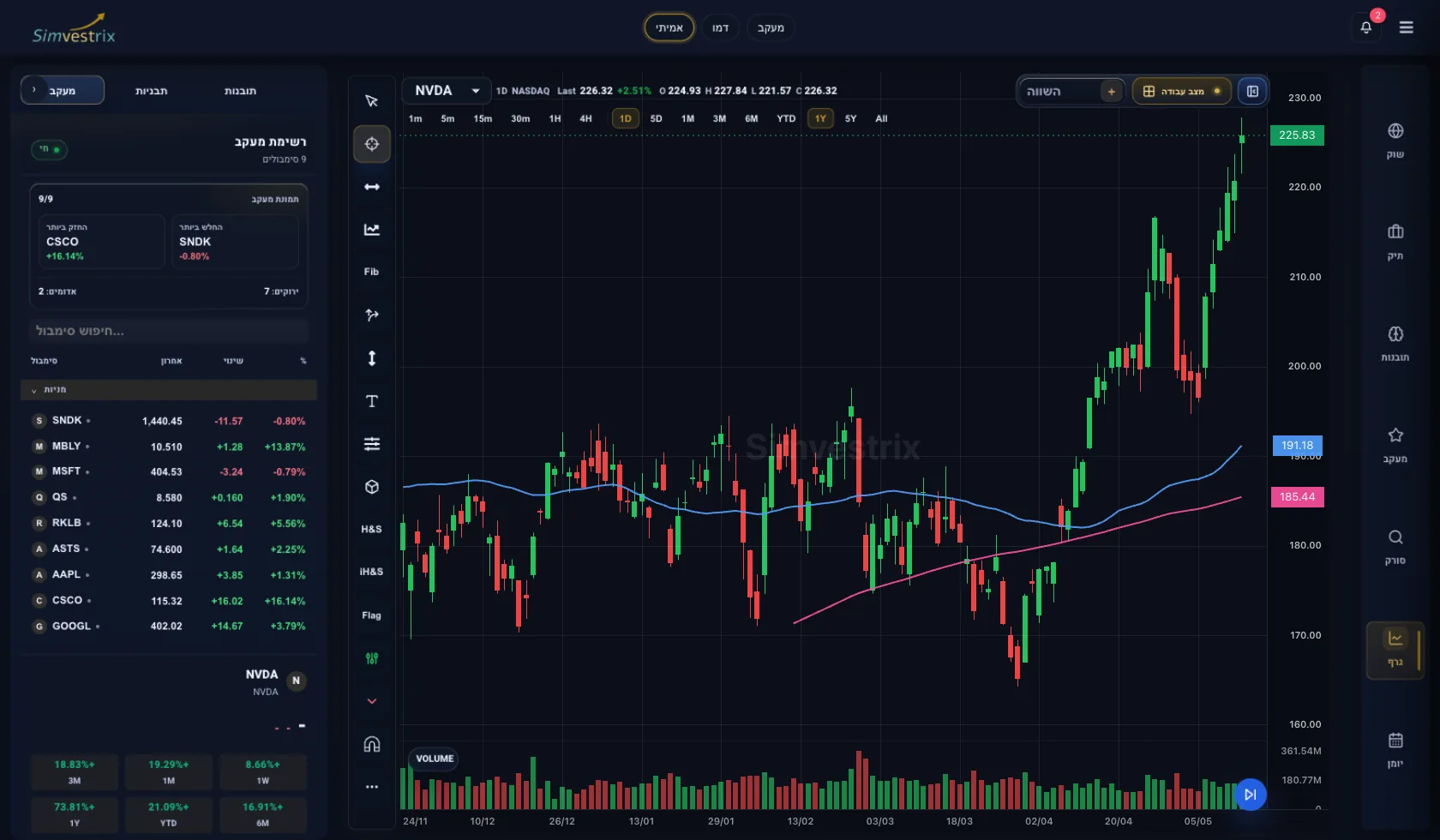
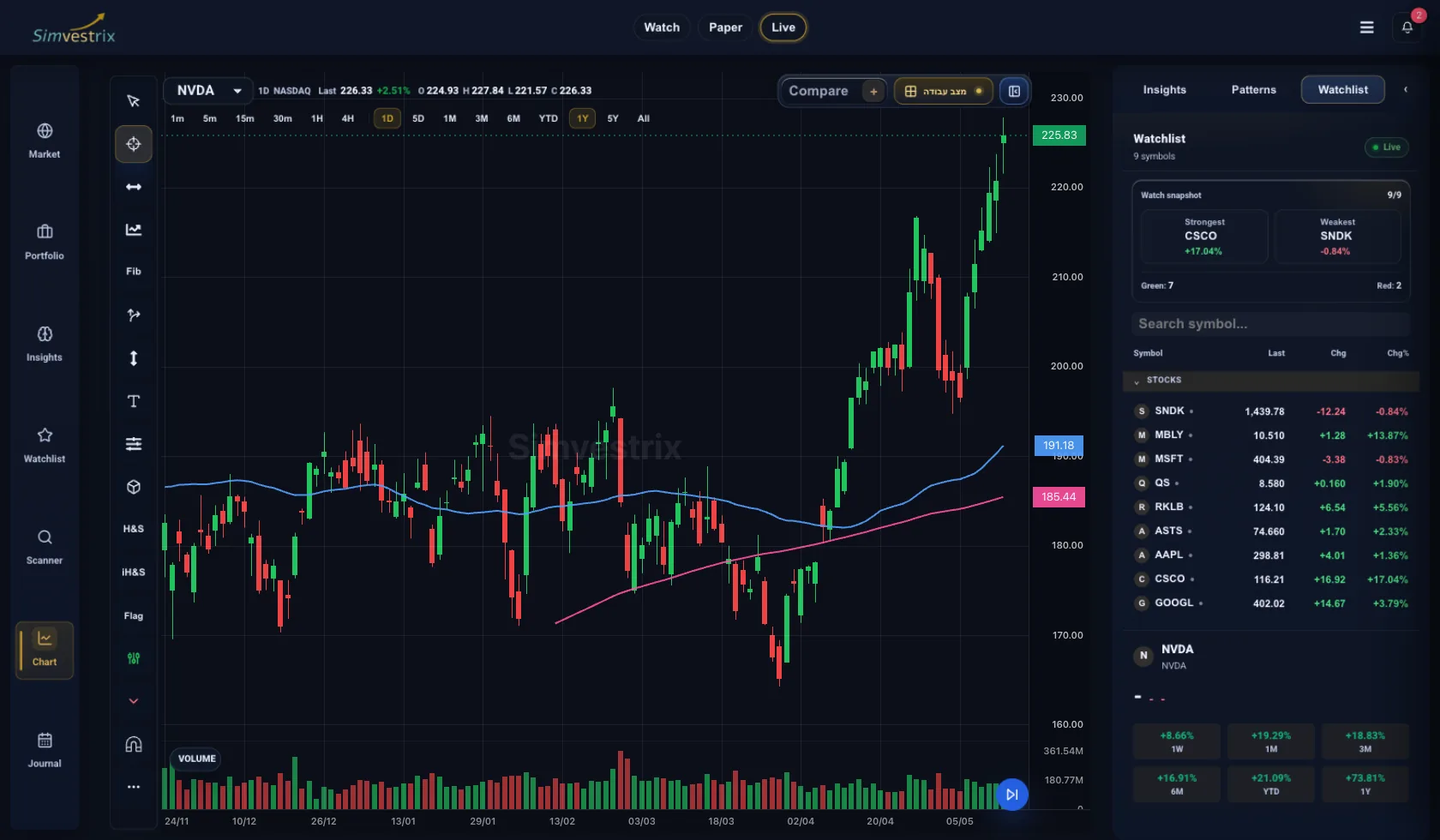
Most traders do not lose focus because they lack ideas. They lose it because too many ideas sit in too many places, with no clear system for what deserves attention now. That is where what is watchlist management becomes a practical question, not a basic one. For active traders, it is the process of organizing, prioritizing, and monitoring symbols so the right setups stay visible and the wrong distractions get pushed out.
Watchlist management is not just building a list of stocks, ETFs, or other assets you might trade. It is the ongoing discipline of deciding what belongs on the list, how those names are grouped, what criteria move them up or down in priority, and when they should be removed. A good watchlist supports decision-making. A bad one creates noise.
What is watchlist management in practice?
In practice, watchlist management is a workflow. You scan the market, identify instruments that meet your criteria, sort them by relevance, and track how they evolve over time. The point is not to collect symbols. The point is to maintain a short path from market research to execution.
For a swing trader, that might mean separating breakout candidates from pullback setups and earnings-related names. For an active investor, it might mean tracking core holdings, potential entries, and names under risk review. For a multi-asset trader, it could include equities, indexes, sector ETFs, futures, or crypto pairs, each with a different monitoring cadence.
The key idea is structure. If every chart has equal importance, nothing has priority. Watchlist management creates hierarchy so your attention goes where it matters most.
Why watchlist management matters
Markets generate more information than any independent trader can process in real time. Prices move, correlations shift, news hits, sectors rotate, and volatility expands or contracts. Without a defined watchlist process, traders often react to whatever is loudest instead of what is best aligned with their plan.
That has consequences. Entries get chased. High-conviction setups get missed. Risk rises because attention is scattered. Even post-trade review becomes weaker because there is no record of what was being tracked, when it became actionable, and why it was selected.
Strong watchlist management solves a few problems at once. It reduces search time, improves focus, and supports more consistent execution. It also creates a cleaner feedback loop. When you know what was on your watchlist and how it was ranked, you can review whether your selection process is actually producing quality opportunities.
This is one of the less discussed edges in trading. Many traders spend significant time refining indicators or entries while ignoring the system that determines what reaches their screen in the first place.
A watchlist is not a scanner
This distinction matters. A scanner helps you find candidates based on rules. A watchlist helps you manage those candidates over time.
Scanners are useful for discovery, but they are often broad and temporary. A watchlist is narrower and more deliberate. It reflects context, not just a screen result. Two stocks may pass the same scan, but only one belongs on your high-priority watchlist because of relative strength, cleaner structure, upcoming catalysts, or better alignment with your risk parameters.
That means watchlist management always includes judgment. Rules help, but discretion still matters. The trade-off is that discretion can improve quality or introduce bias. The more subjective your process becomes, the more important it is to document why names were added, upgraded, downgraded, or removed.
The core components of watchlist management
A useful watchlist usually starts with selection criteria. These criteria vary by strategy, but they should be specific enough to filter noise. Price structure, trend quality, liquidity, volume, volatility profile, catalyst timing, and sector behavior are common inputs.
The second component is classification. One flat list gets messy fast. Serious traders often separate names by strategy, urgency, or market role. You might have one list for active setups, another for secondary names worth monitoring, and another for longer-term research. Some traders also separate by direction, such as long candidates versus short candidates.
The third component is prioritization. Not every name on a watchlist deserves equal screen time. Ranking can be based on technical quality, proximity to entry, catalyst timing, relative strength, or how cleanly the trade fits the plan. This is where watchlist management starts to influence execution quality directly.
The fourth component is maintenance. Markets change, and stale watchlists degrade quickly. Names that break structure, lose liquidity, complete the move, or no longer fit the setup should come off the list. If they do not, your watchlist turns into storage instead of an operational tool.
How experienced traders manage watchlists differently
Less experienced traders often treat a watchlist as a parking lot for ideas. Experienced traders treat it as a decision framework.
The difference shows up in list size, review frequency, and context. Newer traders may hold dozens or even hundreds of names in a single watchlist, updating it irregularly. That feels productive, but it usually reduces clarity. More experienced traders tend to keep tighter lists with clearer labels and defined review routines.
They also connect the watchlist to the rest of the trading process. A symbol is not just interesting. It has a thesis, a setup type, invalidation level, and sometimes a specific condition that must be met before action. That connection between observation and execution is where watchlist management becomes part of a professional workflow rather than a basic feature.
Common mistakes that weaken watchlist management
One common mistake is overpopulation. If your watchlist is too large, your attention gets diluted. Another is poor segmentation. Mixing day trade ideas, swing setups, long-term holdings, and news-driven names in one list creates friction and confusion.
Another problem is failing to define why a symbol is there. If you cannot explain the setup in one sentence, the name probably does not belong in a high-priority list. Traders also run into trouble when they never remove names. Old ideas linger, mental clutter builds, and the list stops reflecting current opportunity.
There is also a timing issue. Some traders only update watchlists after the market opens, when speed matters and distractions increase. A better process usually starts before the session, with updates made when thinking is calmer and more deliberate.
What good watchlist management looks like in a trading workflow
Good watchlist management supports the full cycle of trading activity. Before the session, it helps narrow focus and define where attention should go first. During the session, it keeps actionable names visible without forcing you to rescan the entire market. After the session, it provides material for review.
This matters because execution quality often depends on preparation more than reaction. If you already know which names are close to key levels, where the invalidation sits, and which setups rank highest, decision-making gets faster and cleaner.
This is where integrated tools make a difference. When watchlists sit alongside charting, trade journaling, portfolio tracking, and risk oversight, the workflow becomes more coherent. Instead of moving between disconnected apps, traders can evaluate a symbol, monitor it, execute their plan, and later review the outcome in one environment. For independent traders trying to operate with institutional-level discipline, that kind of consolidation is more than convenience. It reduces friction where mistakes tend to happen.
How to tell if your watchlist process is working
A good watchlist process should produce observable results. You should spend less time searching and more time evaluating. Your highest-quality setups should appear more consistently in your trade review. Missed trades should decline for the right reasons, not because good names were buried.
There is also a qualitative test. Your market view should feel more organized. Not simpler, because markets are rarely simple, but more controlled. You should know what you are watching, why it matters, and what would change your view.
If that is not happening, the issue may not be your strategy. It may be the layer before strategy execution: how you organize opportunity.
Watchlist management is really attention management
At a surface level, watchlist management looks like list building. In reality, it is attention management under market pressure. It determines what reaches your decision process and what stays outside it.
That makes it a serious part of trading performance. Not glamorous, not complex for the sake of complexity, but highly practical. Traders who manage watchlists well tend to make cleaner decisions because they are seeing the market through structure rather than through noise.
If your trading process feels fragmented, start there. Tighten the list, rank the setups, remove what no longer matters, and make the watchlist reflect the trades you actually want to take. Better decisions usually begin before the order ticket ever opens.