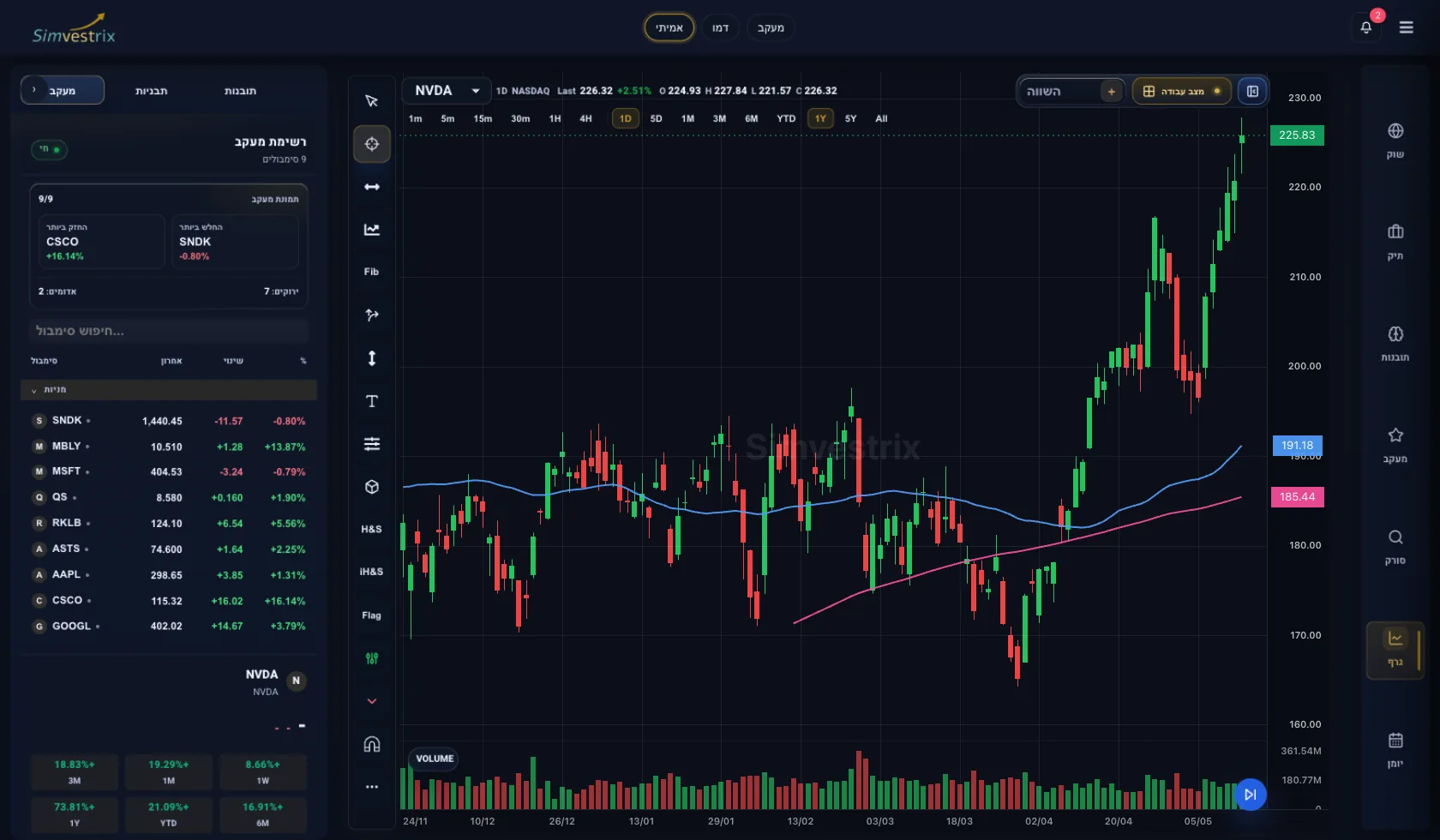
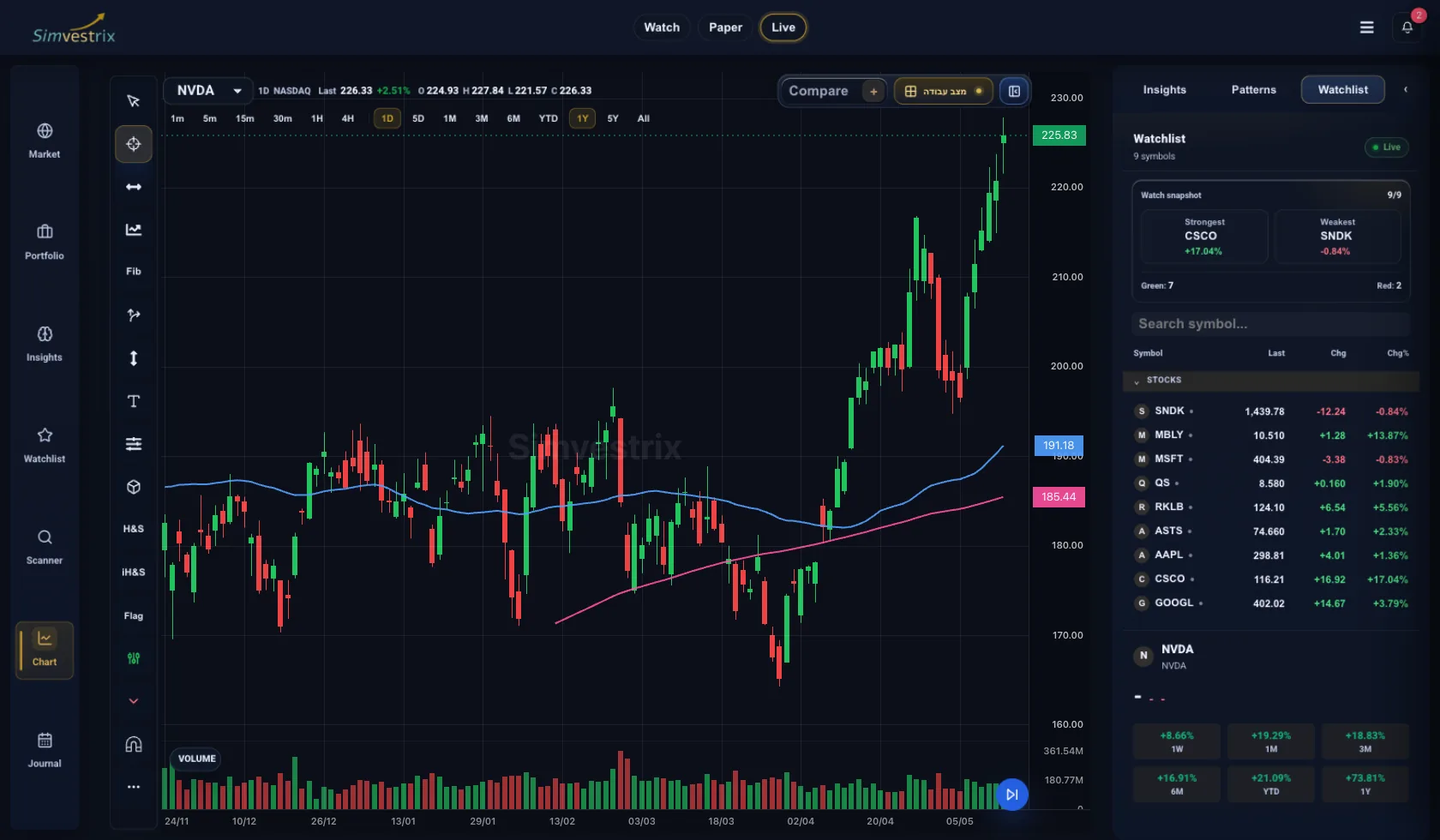
A bloated watchlist creates the same problem as a bloated portfolio: too many names, too little clarity, and delayed decisions when timing matters. That is why watchlist risk management deserves more attention. For active traders, a watchlist is not just a convenience feature. It is an early-warning system, a filter for opportunity, and a control layer that shapes which risks you even allow onto your screen.
Most traders already think about risk at the position level. They define stops, size entries, and monitor drawdown. But risk starts earlier than that. It starts with selection. If your watchlist is cluttered with low-quality names, unranked setups, and symbols that no longer fit your strategy, you are increasing the odds of impulsive trades and reducing the odds of focused execution.
What watchlist risk management actually means
Watchlist risk management is the process of organizing, scoring, and monitoring potential trades before capital is committed. It turns the watchlist from a passive list of symbols into an active risk framework. Instead of asking only, "What might move today?" you ask, "Which names meet my criteria, what kind of risk do they carry, and where do they fit in my current exposure?"
That shift matters. A watchlist should narrow your field of view, not widen it. If every symbol looks equally interesting, the list is not doing its job. Good watchlist risk management helps you distinguish between high-conviction setups, conditional setups, and names that are only worth monitoring from a distance.
For an independent trader, that creates a real edge. You do not have a desk assigning priorities or an analyst feeding you a filtered universe. Your process has to do that work. The cleaner the watchlist, the cleaner the decisions that follow.
Why traders lose control before a trade is placed
Execution errors often get blamed on psychology, but workflow is usually part of the problem. If a trader is scanning dozens of symbols with no ranking logic, no sector awareness, and no pre-defined trigger conditions, the path to a weak trade gets short fast.
One common issue is attention dilution. When too many names are treated as active candidates, important changes go unnoticed. A stock may lose relative strength, earnings may shift the volatility profile, or correlated names may start stacking the same directional bet across the watchlist. None of that is hard to catch if the list is structured well. All of it becomes easier to miss when the watchlist is just a dumping ground for ideas.
Another issue is stale conviction. Traders often keep symbols on a watchlist long after the original reason for tracking them has disappeared. Support broke. Volume dried up. The catalyst passed. But the name stays visible, and visibility can create false relevance. Watchlist risk management forces regular review so old ideas do not keep competing with current ones.
Build the watchlist around risk, not just opportunity
Many traders build watchlists around patterns, sectors, or momentum. That makes sense, but it is incomplete. A stronger approach is to organize the list around both opportunity and risk.
Start with quality of setup. A symbol that is near your trigger, trading with clean structure, and aligned with the broader market should not sit in the same bucket as a speculative idea that needs several conditions to improve. Separate them. Priority should reflect readiness and clarity, not just interest.
Then account for volatility. Two names can look equally attractive on a chart while carrying very different execution risk. One may have orderly price behavior and manageable intraday range. The other may gap unpredictably, trade thinly, or react violently to news flow. If those names sit side by side without any risk labeling, your watchlist is hiding information you need.
Correlation matters too. This is where many active traders underestimate exposure. A watchlist full of semiconductors, regional banks, or high-beta growth names may look diversified at the ticker level while still representing one concentrated macro bet. Watchlist risk management means seeing those relationships before you stack them into real positions.
A practical framework for watchlist risk management
The most effective watchlists use a defined structure. Not a complicated one, just one that reduces ambiguity.
Tier names by actionability
Create tiers based on what each symbol deserves right now. One tier is for trade-ready setups with clear triggers. Another is for developing setups that need confirmation. A third can hold background names worth tracking for theme or sector context.
This keeps your attention proportional. Trade-ready names get the most scrutiny. Context names stay visible without competing for immediate action. That sounds simple, but it solves a major problem: treating every idea as urgent.
Add risk tags that matter to your strategy
Generic labels do not help much. Useful tags do. Mark names by event risk, liquidity profile, average range, gap behavior, and sector concentration. If you trade swings, earnings date proximity may matter more than intraday spread. If you trade shorter-term momentum, relative volume and opening behavior may deserve more weight.
The point is not to create a perfect taxonomy. It is to make risk visible before the trade is live.
Define invalidation before entry
A watchlist should include more than entry interest. It should also capture what would make the setup no longer valid. Maybe a level breaks, relative strength weakens, or the market regime shifts against the setup type. By defining that early, you avoid carrying outdated ideas forward just because the ticker is familiar.
Review the list against current exposure
Your watchlist is part of portfolio risk, even before orders are placed. If your open positions already lean heavily long in one sector, the next names you elevate should be screened through that lens. A good setup in isolation may still be the wrong addition if it compounds the same exposure.
This is where integrated workflows matter. When watchlists, portfolio visibility, and risk tracking sit in the same environment, it becomes easier to see the overlap between what you own and what you are preparing to trade.
What a good system changes in real trading
The immediate benefit of watchlist risk management is better prioritization. You spend less time re-evaluating low-quality names and more time monitoring setups that actually fit your rules. That can improve speed, but more importantly, it improves discipline.
There is also a meaningful review benefit. When watchlist decisions are structured, you can analyze not just your trades but your pre-trade selection process. Were your highest-ranked names actually your best performers? Did event-risk tags help you avoid avoidable losses? Are you consistently overloading one theme? Those are process questions, and process is where durable improvement happens.
For many traders, the biggest gain is reduced friction. A fragmented workflow makes risk management reactive. You check charts in one place, notes in another, holdings somewhere else, and your journal later if at all. In a connected workspace, the watchlist becomes a working layer between research and execution, not a static side panel. That makes control easier to maintain when markets speed up.
Where traders overdo it
There is a trade-off here. More structure is useful, but too much structure can slow you down. If maintaining the watchlist takes longer than analyzing the market, the system is too heavy. The goal is not administrative perfection. It is faster, clearer decisions with better risk context.
The right level of detail depends on your style. A high-frequency trader and a swing trader do not need the same watchlist design. A concentrated portfolio manager can use tighter correlation controls than a trader running short-term, independent setups. It depends on holding period, strategy mix, and how many names you can realistically monitor well.
That is why the best watchlist risk management approach is specific to your decision process. Keep the fields and tags that change behavior. Remove the ones that only create maintenance work.
Turning the watchlist into a control layer
Serious traders do not need more symbols. They need better filtration. A watchlist should help answer a few sharp questions: what deserves attention now, what risk comes with it, how does it fit current exposure, and what would disqualify it.
When those answers are built into the workflow, the watchlist stops being a passive collection of ideas and starts acting like a control layer for the entire trading process. That is the real value of watchlist risk management. It improves trade selection before emotion, noise, or market speed get a vote.
If your current list makes you scan more but see less, it is time to tighten the structure. Better trading starts well before the order ticket does.