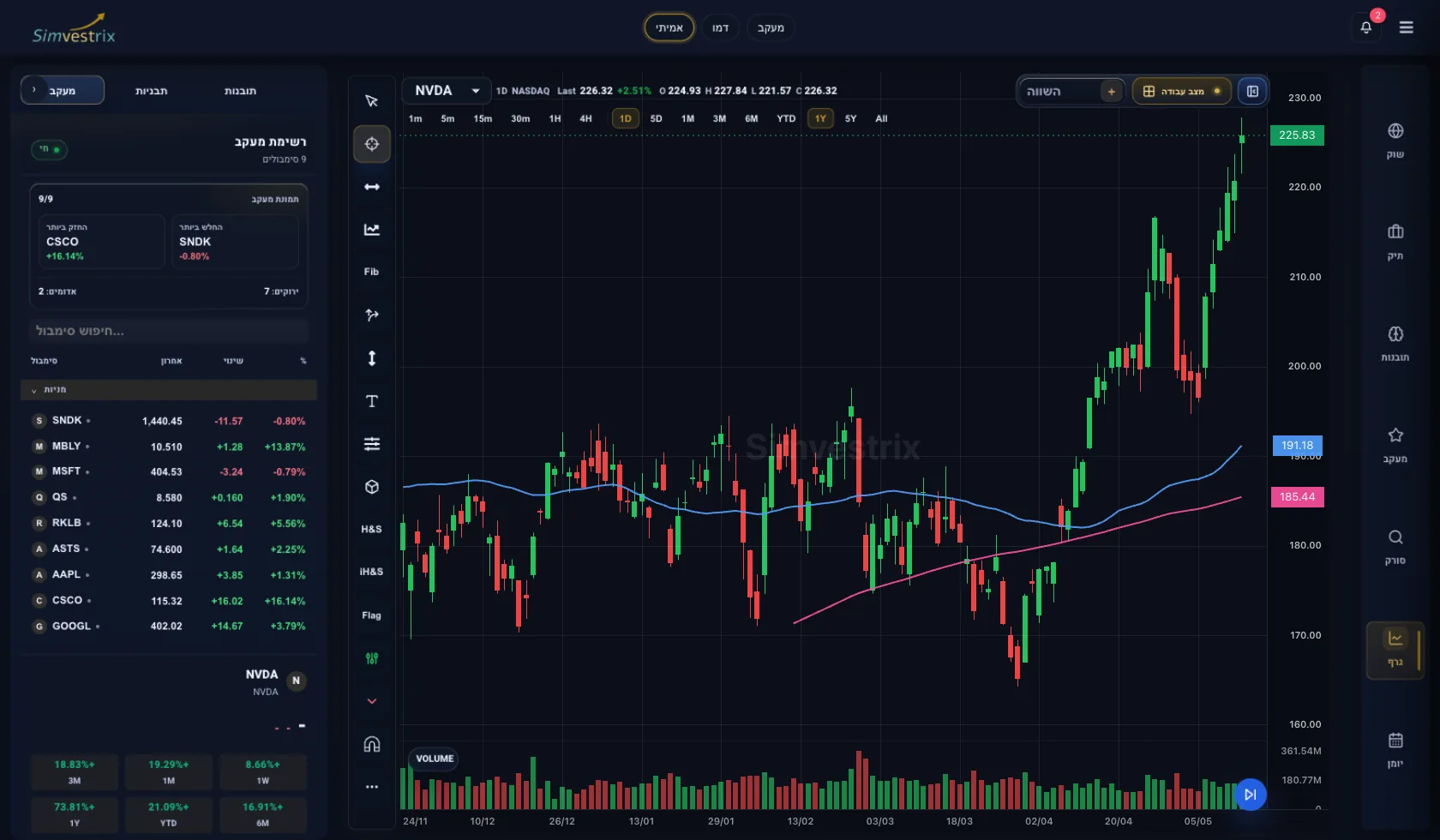
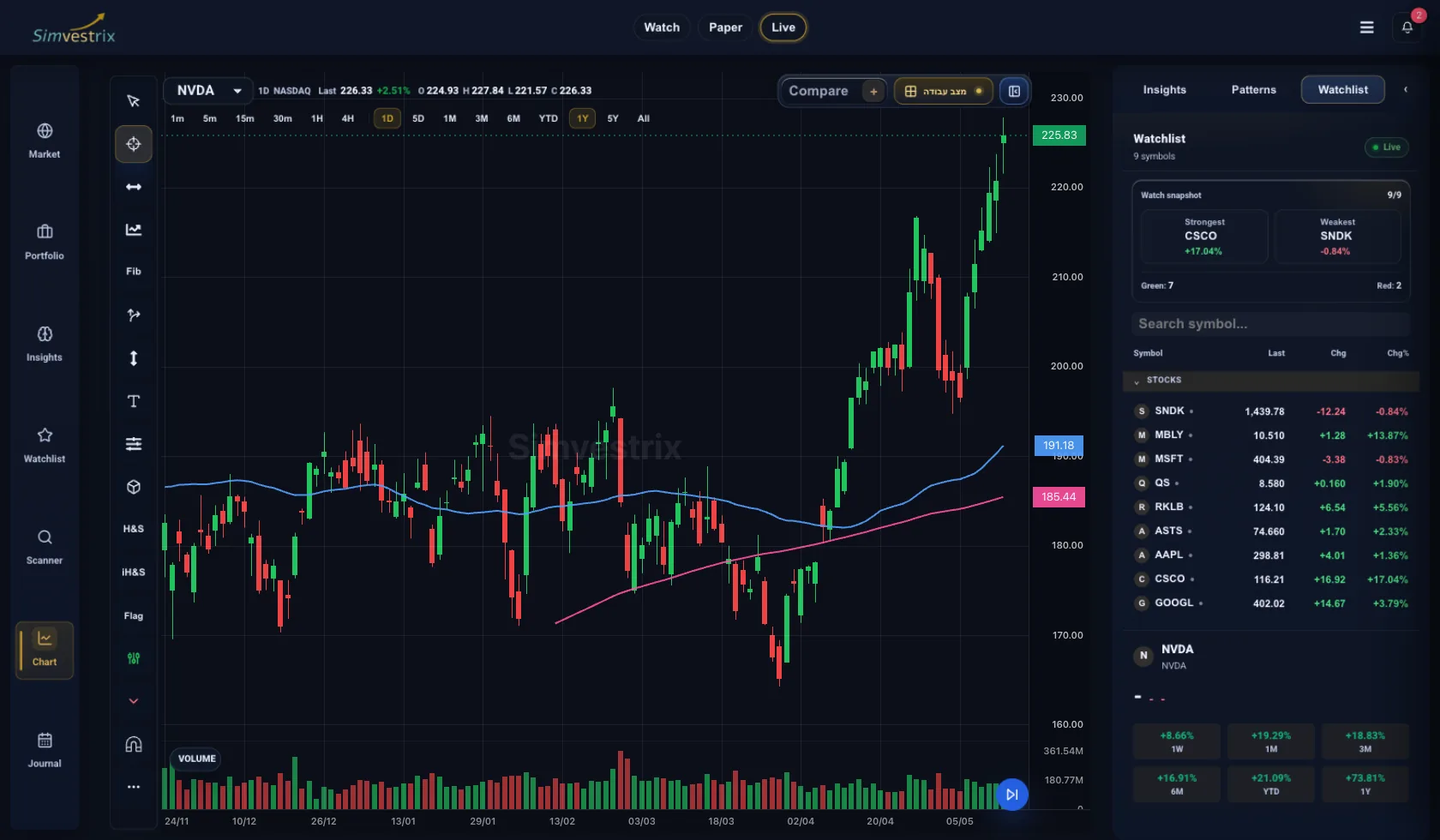
A trade can look right on the chart and still be wrong for your account. That gap is where trading risk management software earns its place. For independent traders, risk control is not a side tool or a spreadsheet you update after the fact. It is part of the decision itself - before entry, during the trade, and after the position is closed.
The problem is not a lack of data. Most active traders already have charts, broker platforms, scanners, notes, and maybe a journal. The problem is fragmentation. Risk gets split across tabs, calculators, and memory. When that happens, position sizing slips, portfolio overlap goes unnoticed, and post-trade review becomes shallow. Software that treats risk as part of a connected trading workflow solves a very different problem than a basic stop-loss calculator.
What trading risk management software should actually do
At a minimum, the software should help you answer a few non-negotiable questions quickly. How much are you risking on this trade? How does that risk fit your account size? What happens if several correlated positions move against you at once? Are your recent losses random variance or a sign that your process is drifting?
Plenty of tools can answer one of those questions. Fewer can answer all of them in context. That distinction matters. If you have to leave your workspace to calculate size, then open another app to review your journal, then manually reconcile positions to understand portfolio exposure, your process is slower and more error-prone than it needs to be.
Good trading risk management software brings position sizing, trade tracking, portfolio visibility, and review into one operating environment. That does not mean every trader needs institutional-level complexity. In fact, for self-directed traders, too much complexity can create its own form of risk. The best setup is one that gives you fast clarity without forcing you into an enterprise workflow built for a desk of analysts.
Risk management is more than stop placement
A lot of retail trading tools reduce risk management to one number: where the stop goes. Stop placement matters, but it is only one layer.
Real risk control starts with position sizing. A clean setup with a wide stop may still be a poor trade if the dollar risk is too large relative to your account. Then there is portfolio concentration. You may think you have three different trades on, but if all three are highly correlated tech names or all tied to the same macro theme, you may be carrying one oversized bet.
The next layer is process risk. This is where journaling and review matter. If your last 20 trades show that you consistently widen stops, add to losers, or oversize after a win streak, the issue is not market noise. It is execution discipline. Software that captures and surfaces those patterns is much more valuable than a tool that only performs one-off calculations.
That is why connected systems tend to outperform standalone utilities for serious independent traders. They keep risk visible across the full workflow instead of isolating it to order entry.
The features that matter most
When traders evaluate trading risk management software, feature lists can get noisy fast. The useful question is simpler: which capabilities improve control without adding friction?
Position sizing is first. You should be able to define account-level risk rules and apply them consistently across trades. If the software helps translate a setup into share size, dollar risk, and potential reward in a few clicks, it removes one of the most common sources of avoidable error.
Portfolio tracking is next. Risk is rarely isolated to a single symbol. You need a view of open positions, sector or theme concentration, and account-level exposure. This is especially important for swing traders and active investors who may hold multiple positions across several days or weeks.
Trade journaling matters more than many traders want to admit. Not because journaling is fashionable, but because risk behavior leaves a trail. A journal tied to actual trades, charts, and outcomes makes it easier to spot recurring mistakes. If the journal is disconnected from the rest of your trading activity, review tends to become inconsistent.
Watchlists and market analysis also belong in the conversation. They may not sound like risk tools at first, but they shape selection quality and timing. Better organized research can reduce forced trades, late entries, and low-conviction setups. Risk management is partly about avoiding bad trades before they happen.
Why disconnected tools break discipline
Most independent traders do not start with an integrated system. They build one over time. A broker platform for execution, a charting app for technical analysis, a spreadsheet for position sizing, a note app for setups, and maybe a journal they update when they remember.
That arrangement can work for a while. The trouble starts when speed and consistency matter. Manual handoffs between tools create gaps. Numbers get entered wrong. Trades go unlogged. Exposure is judged by feel instead of by data. Review gets delayed until the details are blurry.
This is where workflow design becomes a risk issue. A fragmented setup asks the trader to act as the integration layer. That works only if attention is always high and process discipline never slips. In real trading, neither condition holds all the time.
An integrated workspace reduces that burden. When charting, watchlists, trade records, portfolio tracking, and risk oversight live in the same environment, the trader spends less time stitching together context and more time making controlled decisions. For a platform built around trader independence, that kind of consolidation is not just convenient. It directly supports better execution.
Choosing software based on your trading style
Not every trader needs the same level of risk infrastructure. Day traders may prioritize fast sizing and intraday exposure control. Swing traders often need stronger portfolio-level visibility because positions overlap across time. Multi-asset traders may care more about how different positions interact under broader market moves.
The right software depends on how you actually trade, not how you imagine an ideal future process. If you manage a concentrated book with a handful of high-conviction positions, portfolio analytics may matter more than advanced alert logic. If you take frequent tactical entries, speed and repeatability may matter more than deep customization.
There is also a trade-off between flexibility and structure. Some traders want fully customizable dashboards and fields. Others are better served by a more defined workflow that reduces decision fatigue. More options are not always better. In risk management, clarity usually beats complexity.
What to look for in a serious platform
A strong platform should make risk visible before it becomes expensive. That means your account context, active positions, trade history, and research workflow should not live in separate silos.
Look for software that supports the full cycle: planning, monitoring, reviewing, and adjusting. If a tool helps you build watchlists, analyze setups, track portfolio behavior, journal trades, and measure performance in one place, it gives you a cleaner operating model. That is especially useful for traders who are moving beyond casual activity and trying to build a more repeatable process.
This is where a platform like Simvestrix fits naturally. The value is not in offering one more isolated feature. It is in combining the key trading support functions into a connected workspace so risk management is part of the daily operating system, not an afterthought.
The real payoff of trading risk management software
The biggest benefit is not that software will prevent every bad trade. It will not. Losses are part of trading, and no platform changes that. What good software can do is reduce preventable losses caused by poor sizing, hidden exposure, weak review habits, and disorganized execution.
That payoff compounds quietly. A trader who sees risk clearly tends to make fewer impulsive decisions. A trader who reviews performance in context tends to adjust faster. A trader who works from one organized environment wastes less energy on tool management and keeps more attention on the market and the process.
For independent traders, that is the point. Better risk management is not about adding more dashboards or more jargon. It is about creating a structure that supports disciplined decisions under real market conditions. When your software helps you do that consistently, it stops being a utility and starts becoming part of your edge.
The best trading systems are not the ones with the most moving parts. They are the ones that make disciplined action easier every day.