A spreadsheet looks efficient right up until your review process starts costing you trades. That is the real issue in the trading journal vs spreadsheet debate. It is not about whether rows and formulas can store trade data. They can. It is about whether your review system helps you spot mistakes, measure risk, and improve execution before the next setup appears.
For many independent traders, the spreadsheet is the default starting point. It is familiar, flexible, and cheap. You can build columns for entry price, exit price, size, P and L, setup type, and notes in an afternoon. Early on, that feels like enough.
Then the workload changes. You are no longer just logging outcomes. You are trying to understand behavior across dozens or hundreds of trades. You want to know where slippage is creeping in, which setups hold up by market condition, how your average loser compares to plan, and whether your best ideas are actually the ones getting the least capital. That is where a dedicated journal starts to separate itself.
Trading journal vs spreadsheet: the real difference
The core difference is simple. A spreadsheet is a flexible file. A trading journal is a review system.
That distinction matters because active trading is not just recordkeeping. It is process management. The goal is not to save trade history somewhere. The goal is to create a repeatable way to evaluate decisions, track performance drivers, and tighten risk control over time.
A spreadsheet gives you open-ended structure. That can be useful if you know exactly what to track and you are disciplined enough to maintain it consistently. But that same flexibility becomes a weakness when every improvement requires manual edits, new tabs, updated formulas, and more time spent maintaining the tool than learning from the data.
A trading journal is designed around the review workflow itself. Instead of asking you to build the system, it gives you a framework for capturing trades, tagging them, reviewing patterns, and analyzing performance with less friction. That changes how often you review and how much you trust what you see.
Where spreadsheets still make sense
A spreadsheet is not the wrong tool in every case. For newer traders, it can be a practical first step. If your trade count is low, your strategy set is narrow, and your main objective is simply to build the habit of logging trades, a spreadsheet can do the job.
It also works for traders who want total control over custom fields and calculations. If you are highly organized and comfortable building formulas, pivot tables, and visual reports, you can create a decent manual system. Some traders genuinely prefer that level of control.
The trade-off is maintenance. Every custom setup requires ongoing effort. Every new metric needs to be built. Every inconsistency in data entry creates problems later. The more your trading activity grows, the more likely it is that the spreadsheet turns into a side project.
That is usually the breaking point. Once the journal itself becomes another task to manage, review quality drops.
Why a dedicated trading journal usually outperforms a spreadsheet
A dedicated journal is built for speed, consistency, and analysis. That gives active traders an advantage in three areas that matter most: cleaner data, stronger review discipline, and better decision support.
Cleaner data matters because performance analysis is only as good as the inputs. In a spreadsheet, one typo, one broken formula, or one inconsistent tag can distort your reporting. If one trade is labeled "breakout" and another is labeled "Break Out," your setup analysis is already compromised. A journal built for trading reduces that kind of noise with structured fields and more consistent data capture.
Review discipline matters because most traders do not struggle with knowing they should review. They struggle with reviewing consistently enough to change behavior. A dedicated journal lowers the friction. When trade data, notes, charts, and performance breakdowns are organized in one environment, post-trade review becomes a usable habit instead of a weekly cleanup project.
Decision support matters because the value is not in storing trades. It is in seeing what the data is telling you. A purpose-built journal helps surface performance by setup, time frame, symbol, market condition, or execution pattern without forcing you to rebuild analysis each time you want an answer. That makes it easier to act on what you learn.
The hidden cost of spreadsheets: fragmented workflow
The spreadsheet problem is rarely just the spreadsheet itself. It is what surrounds it.
Most traders using spreadsheets are also toggling between chart screenshots, broker exports, notes apps, watchlists, and separate portfolio trackers. Trade review becomes fragmented by default. You gather data from one place, annotate it in another, and try to reconstruct what happened after the fact.
That fragmentation introduces delays and weakens context. By the time you review a trade, the details that mattered most may already be gone. Why you entered, what invalidation you planned, how the position fit within portfolio exposure, and whether the setup matched your watchlist criteria all become harder to assess when each piece lives in a different tool.
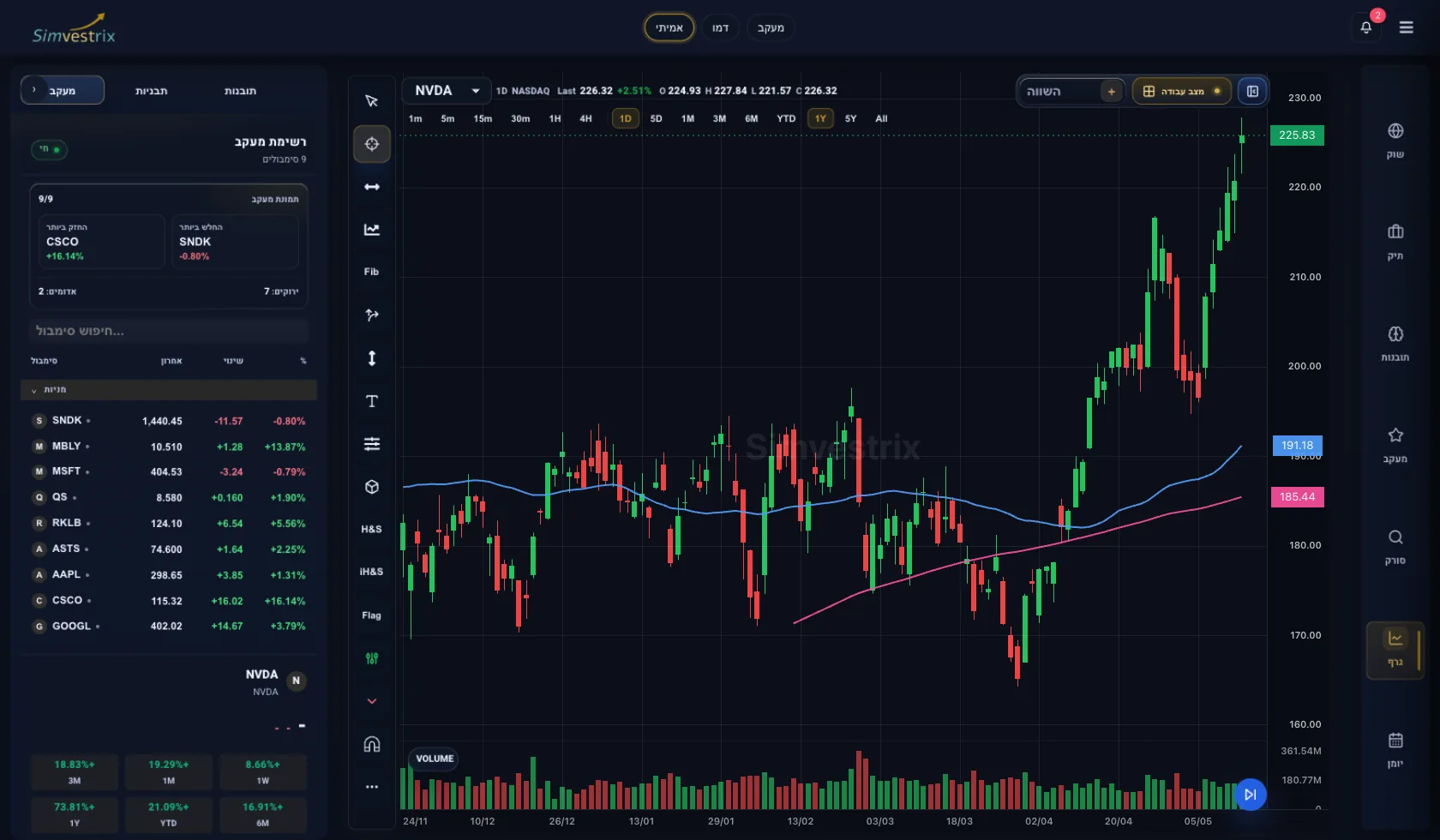
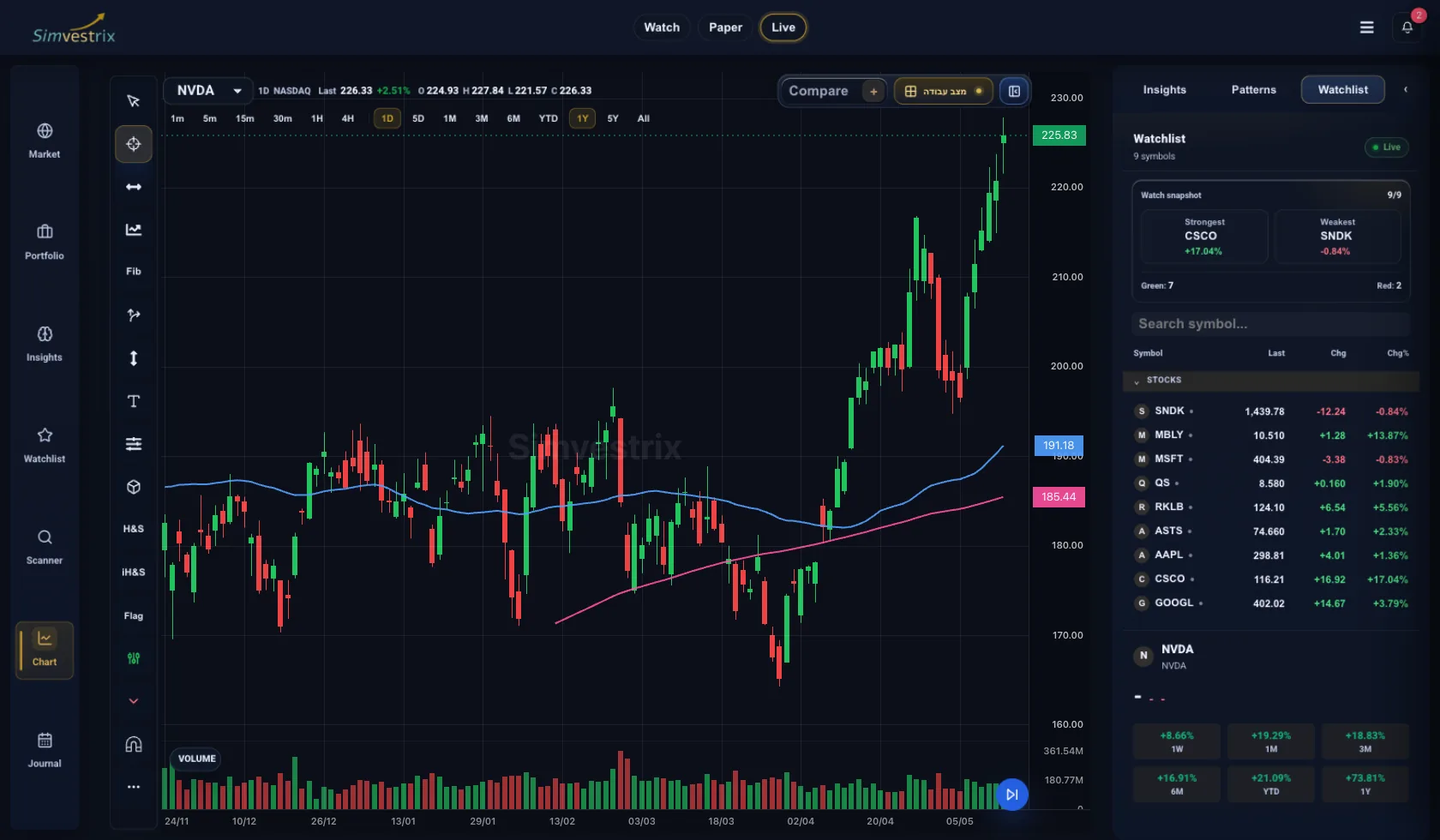
This is where an integrated workspace has a clear edge. When journaling sits alongside charting, watchlists, portfolio tracking, and risk oversight, review becomes connected to the actual trading process. You are not patching together evidence. You are working from a complete operating record.
For traders who want tighter control, that is a major difference.
When the spreadsheet starts holding you back
There are a few clear signs that your current system is limiting your progress.
The first is avoidance. If you keep postponing review because updating your journal feels tedious, the tool is creating friction. The second is uncertainty. If you cannot quickly answer basic performance questions, your data structure is not doing enough. The third is inconsistency. If tags, notes, and metrics vary from trade to trade, your analysis will always be weaker than it should be.
Another common sign is narrow analysis. Many spreadsheet-based journals track P and L well enough but miss the deeper drivers. They show whether you made money, not whether you traded well. That is a serious limitation. A good review process should separate execution quality from outcome. Otherwise, lucky trades get reinforced and disciplined losses get punished in your own analysis.
That is one reason experienced traders eventually move beyond spreadsheets. As performance standards rise, they need a tool that supports decision review, not just bookkeeping.
Choosing the right tool for your trading style
The best choice depends on volume, complexity, and how serious you are about process improvement.
If you place a limited number of trades, follow one simple strategy, and mainly want a basic log, a spreadsheet may be enough for now. It gives you low-cost flexibility, and if you maintain it carefully, it can provide useful visibility.
If you trade actively, manage multiple setups, monitor risk across positions, or want faster feedback loops, a dedicated journal is the better fit. At that point, your bottleneck is not data storage. It is analysis speed and workflow consistency.
This is especially true for traders who want to operate with more structure. Once journaling becomes part of a broader trading system rather than a standalone document, the benefits compound. Better records support better reviews. Better reviews support better execution. Better execution supports more stable risk management.
That is the real progression.
What independent traders should prioritize
A serious review tool should help you answer practical questions without manual reconstruction. Which setups produce your best expectancy? Where are you violating risk rules? Are your losses coming from bad entries, oversized positions, or weak exits? Are your winners concentrated in specific market environments? If the tool cannot help you answer those questions quickly, it is not doing enough.
That does not mean complexity is always better. The right system should reduce effort, not add more dashboards than you need. Utility matters more than novelty. For most independent traders, the strongest solution is the one that keeps trade data, analysis context, and review workflow aligned.
That is why platforms built around connected trading functions tend to age better than custom spreadsheets. They are not just faster to use. They are better matched to how traders actually improve.
Simvestrix fits that model by bringing journaling into a broader workspace for charting, watchlists, portfolio tracking, market analysis, and risk management. For traders who are tired of stitching together separate tools, that kind of structure can remove a lot of operational drag.
The spreadsheet will always have a place. It is flexible, familiar, and capable in the hands of a disciplined user. But if your review process needs to be faster, cleaner, and more actionable, a dedicated journal is usually the stronger choice. The more seriously you treat trading as a process, the less sense it makes to run your review system like a patchwork file.